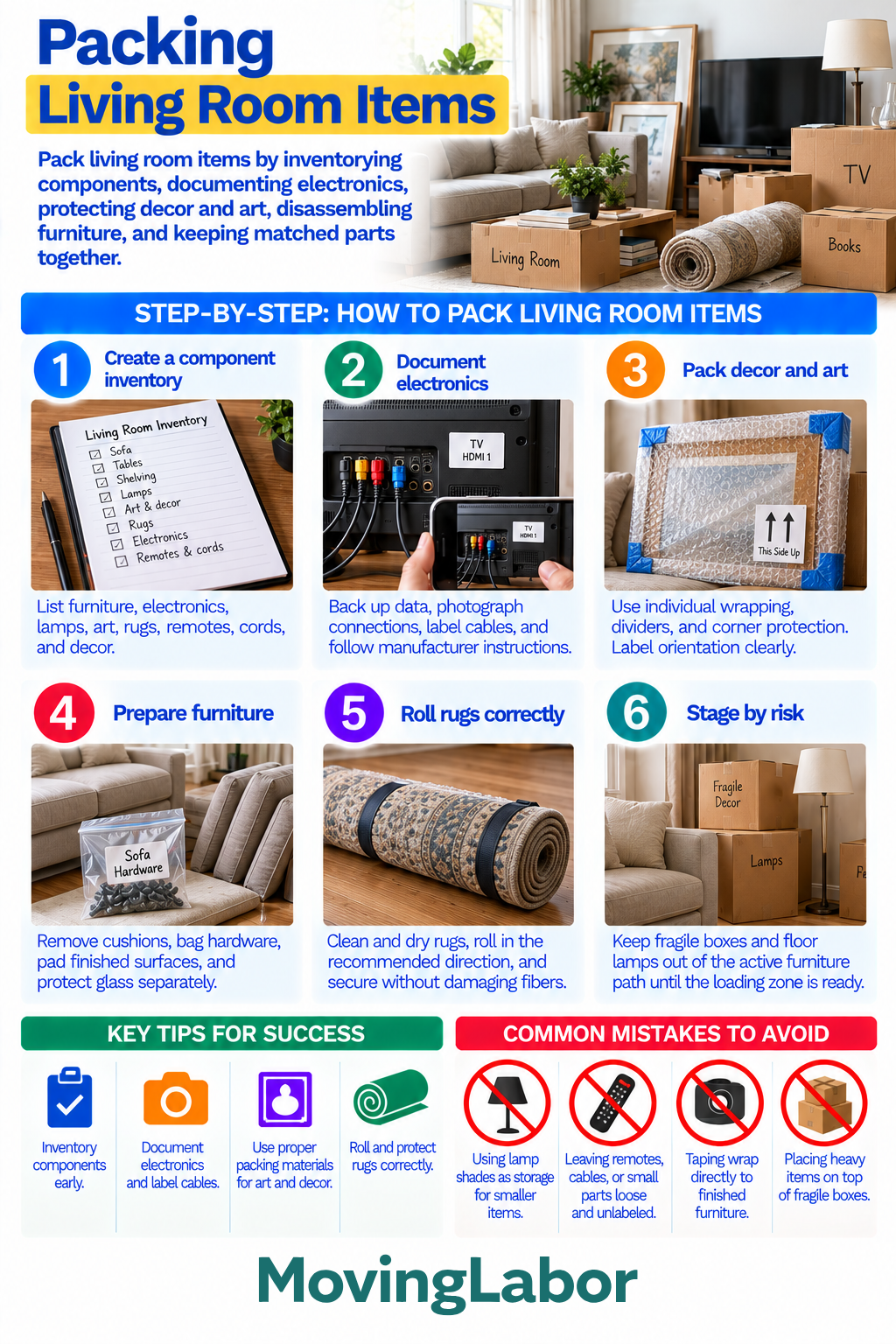
Living rooms combine furniture, electronics, lamps, artwork, rugs, and fragile decor. Pack these items by organizing components, documenting electronics, protecting fragile pieces, preparing furniture, and keeping related parts together.
Complete most preparation before furniture enters the loading area so protective coverings, hardware, and fragile components are handled properly.
Quick Answer
Pack living room items in this order:
- Inventory furniture, electronics, lamps, art, rugs, and decor.
- Photograph electronics connections before disconnecting cables.
- Label remotes, cords, hardware, and detachable components.
- Pack fragile decor and artwork separately.
- Prepare and protect furniture before carrying it.
- Clean and roll rugs according to their care instructions.
- Keep fragile items away from active furniture-moving paths.
Use appropriate protection for each item's material rather than applying the same packing method to everything.
Step-by-step plan
1. Organize furniture and components
Identify the major items in the room before packing begins.
Include:
- Sofas and chairs
- Coffee and end tables
- Shelving
- Lamps
- TVs and electronics
- Artwork and mirrors
- Rugs
- Decorative items
- Remotes and cables
Keep detachable parts associated with the item they belong to. Labeling components now makes setup easier after the move.
2. Document and prepare electronics
Back up important data where applicable and photograph complicated connections before disconnecting equipment.
Label cables by device or connection point and keep remotes, adapters, stands, mounting hardware, and other accessories organized.
Use original or appropriately fitted packaging when available, protect screens from direct pressure, and follow manufacturer instructions for packing and transportation orientation.
3. Pack decor, artwork, and lamps
Wrap fragile decorative pieces individually and prevent hard surfaces from contacting one another.
Use suitable boxes, cushioning, dividers, corner protection, or specialty cartons based on the item.
For artwork and mirrors, protect vulnerable faces and corners and use appropriate fitted cartons when needed.
Remove lamp shades and bulbs before moving lamps when appropriate. Pack shades separately rather than filling them with smaller belongings.
4. Prepare furniture
Remove appropriate detachable components before moving large furniture.
Depending on the piece, this may include:
- Cushions
- Shelves
- Furniture feet
- Glass components
- Other removable parts
Bag and label hardware immediately.
Use clean moving blankets or suitable protective materials on finished surfaces, corners, and edges. Avoid applying adhesive tape directly to vulnerable furniture finishes.
Follow manufacturer instructions when disassembling specialized furniture.
5. Prepare rugs
Clean and completely dry rugs before packing or rolling them.
Many rugs are transported rolled rather than folded, but construction and care requirements vary. Follow applicable care instructions for the specific rug.
Secure the rolled rug without placing unnecessary pressure on its fibers or edges, and protect it from dirt and moisture during the move.
6. Stage items by handling risk
Avoid placing fragile cartons, lamps, artwork, or electronics directly in active furniture-moving paths.
Create a protected staging area until the appropriate loading space is ready.
Keep heavier furniture and fragile belongings separated during staging so large pieces do not accidentally strike or crush packed decor.
Decision checkpoints
- Before disconnecting electronics: Photograph connections and label cables and accessories.
- Before packing fragile decor: Choose appropriate boxes and protective materials.
- Before moving furniture: Remove or secure loose components and finish protective wrapping.
- Before rolling rugs: Make sure they are clean and completely dry.
- Before loading: Move fragile cartons, artwork, lamps, and electronics into protected staging areas.
- Before leaving: Confirm remotes, hardware, cables, and detachable components are accounted for.
Living room packing checklist
- Furniture and components inventoried
- Electronics connections photographed
- Important electronic data backed up
- Cables and remotes labeled
- Fragile decor individually protected
- Artwork and mirrors appropriately packed
- Lamp shades packed separately
- Furniture hardware bagged and labeled
- Loose furniture components removed or secured
- Finished furniture surfaces protected
- Rugs clean and dry
- Rugs prepared according to care instructions
- Fragile cartons clearly labeled
- Electronics protected from pressure
- Fragile items kept out of furniture-moving paths
Common mistakes to avoid
Packing smaller items inside lamp shades
Lamp shades can crush or deform easily. Pack them separately with appropriate protection rather than using them as storage space.
Leaving remotes, cables, or hardware loose
Small components are easy to lose during a move. Label and organize them according to the furniture or electronic device they belong to.
Applying tape directly to furniture
Adhesive can leave residue or affect some finishes. Secure moving blankets and other protective materials without taping directly to vulnerable surfaces.
Packing artwork like ordinary household items
Artwork, mirrors, and framed pieces may require corner protection, fitted cartons, appropriate orientation, and protection from pressure.
Folding every rug
Rug construction varies. Follow applicable care guidance rather than assuming every rug can be folded or rolled the same way.
Staging fragile items in the carrying path
Lamps, electronics, artwork, and fragile boxes can be damaged while larger furniture is being carried. Keep them in a protected staging area until they are ready to load.
Where professional moving labor fits
Professional moving labor can help prepare, carry, load, and unload sofas, tables, shelving, electronics, rugs, and other living room furniture.
Before booking, identify unusually large, heavy, fragile, or specialized items. Confirm whether furniture disassembly, electronics packing, artwork preparation, and protective materials are included or need to be handled separately.
If you are packing yourself, organize remotes, cables, hardware, and detachable components before the crew arrives and keep fragile items away from active carrying paths.
Use Professional packing help or the Packing Materials Calculator to continue planning. For this guide, apply the result to the Create a component inventory step and confirm the final scope, availability, minimums, and price in writing.