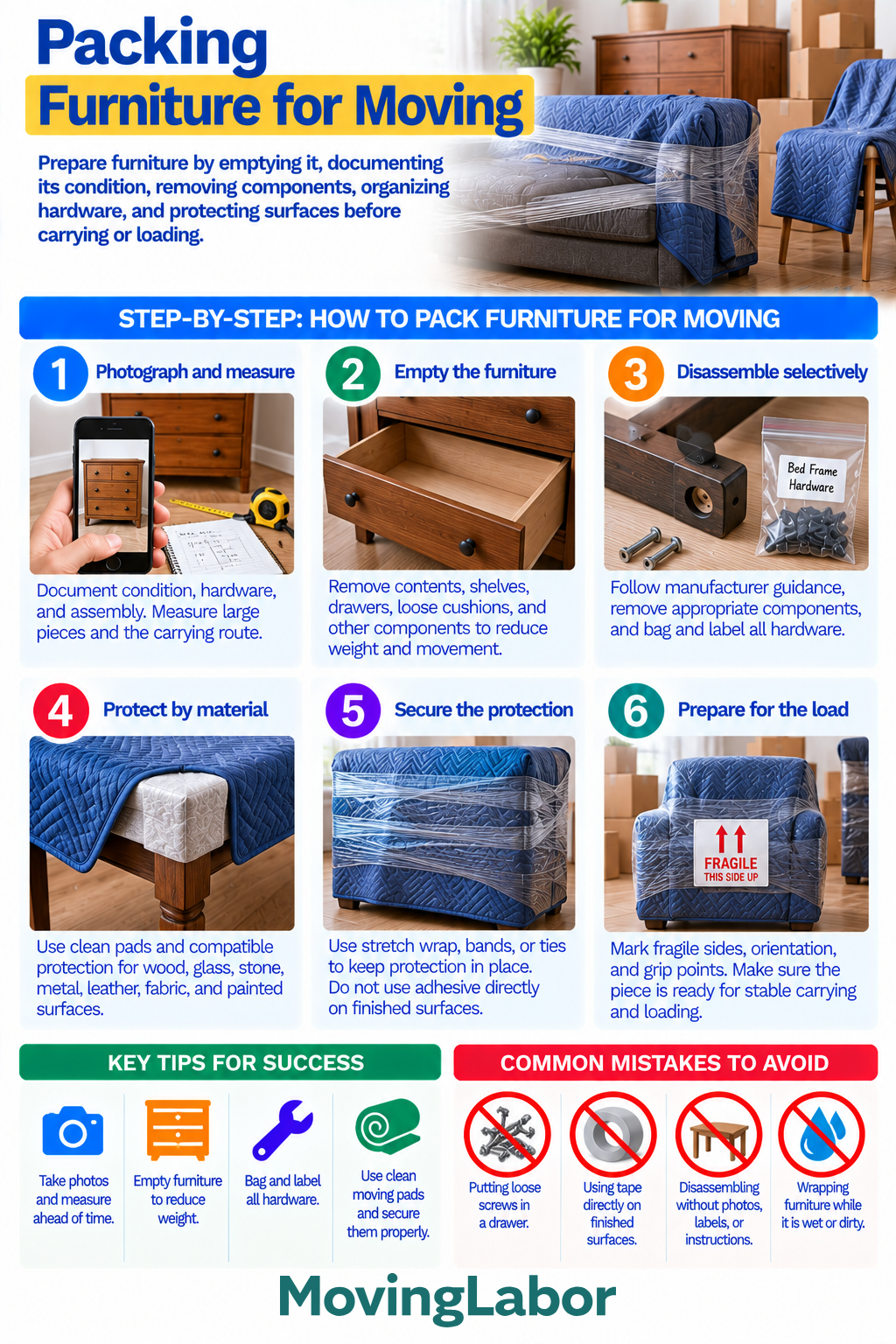
Prepare furniture for moving by emptying it, documenting its condition, removing appropriate components, organizing hardware, and protecting vulnerable surfaces before the item is carried or loaded.
Furniture materials and construction vary, so use protection appropriate for the piece and follow manufacturer instructions when disassembly, orientation, or handling requirements apply.
Quick Answer
Prepare furniture before it reaches the loading area. For each piece:
- Empty the furniture as appropriate.
- Photograph its condition and assembly when useful.
- Measure large pieces and tight pathways.
- Remove safe, detachable components when helpful.
- Bag and label all hardware immediately.
- Protect corners, edges, glass, and finished surfaces.
- Secure moving blankets or other protection without applying adhesive directly to finishes.
- Identify fragile surfaces or orientation requirements before carrying.
Do not disassemble furniture simply because a component appears removable. Check how the piece is constructed and follow manufacturer instructions when applicable.
Step-by-step plan
1. Photograph and measure
Photograph furniture before preparing it, particularly valuable, complicated, or easily damaged pieces.
Useful photos can document:
- Existing condition
- Hardware locations
- Assembly points
- Shelf positions
- Cable or component locations
Measure large furniture when clearance may be tight. Compare the dimensions with doorways, hallways, stairways, elevators, and other parts of the carrying route.
Remember that turning and maneuvering space can matter as much as doorway width.
2. Empty and prepare the furniture
Remove contents that could add unnecessary weight, shift during carrying, or damage the furniture from inside.
Depending on the piece, remove or secure:
- Shelves
- Drawers
- Loose cushions
- Glass panels
- Removable doors
- Other loose components
Whether drawers can remain in a dresser depends on the furniture's construction, the contents, the handling method, and the moving provider's requirements.
Remove heavy, fragile, liquid, or valuable belongings from furniture before moving it.
3. Disassemble selectively
Disassemble furniture when doing so makes the piece safer or more practical to move and the item is designed to come apart.
Common removable components may include:
- Table legs
- Bed-frame components
- Shelves
- Headboards
- Detachable furniture feet
- Other manufacturer-approved parts
Take photos before disassembling complicated connections.
Place screws, bolts, washers, brackets, and other small parts in a sealed, labeled bag. Identify exactly which piece of furniture the hardware belongs to.
Follow manufacturer instructions for adjustable, mechanical, modular, or otherwise specialized furniture.
4. Protect furniture by material
Different surfaces can require different protection.
Moving blankets or furniture pads can protect many furniture surfaces from scratches and contact during handling. Add appropriate protection to corners, edges, glass, stone, finished wood, upholstery, and other vulnerable areas as needed.
Avoid assuming that one wrapping method is suitable for every material. Wood finishes, leather, fabric, glass, painted surfaces, and other materials can respond differently to pressure, moisture, adhesives, and prolonged wrapping.
Make sure furniture is clean and dry before covering it.
5. Secure the protection
Keep moving blankets and other protective materials in place while the furniture is carried and loaded.
Depending on the item, use:
- Moving bands
- Appropriate ties
Secure the protective covering rather than applying adhesive tape directly to finished wood, upholstery, leather, painted surfaces, or other vulnerable finishes.
Avoid wrapping so tightly that the covering creates unnecessary pressure on delicate components.
If furniture will remain wrapped for storage, consider the material, storage conditions, and manufacturer guidance before using coverings that may restrict airflow or trap existing moisture.
6. Prepare furniture for carrying and loading
Before moving the piece, check that protection is secure and that nothing can unexpectedly open, detach, or shift.
Identify any:
- Fragile sides
- Glass components
- Protruding parts
- Orientation requirements
- Areas that should not support weight
- Appropriate handling points
Make sure the carrying route is clear before moving large furniture.
After the item is positioned in the truck or container, check that the protective covering has not shifted. Protect contact points and secure the furniture appropriately as part of the overall load.
Decision checkpoints
- Before preparing large furniture: Measure the piece and check the carrying route when clearance may be limited.
- Before disassembly: Photograph complicated connections and determine which components are designed to be removed.
- As parts are removed: Bag and label hardware immediately.
- Before wrapping: Make sure the furniture is clean and dry and choose protection appropriate for its materials.
- Before carrying: Confirm that loose components are removed or secured and protective coverings will stay in place.
- After loading: Recheck vulnerable surfaces, contact points, and load securement.
Furniture packing checklist
- Furniture condition documented when useful
- Large pieces measured
- Carrying route checked
- Contents removed as appropriate
- Loose components removed or secured
- Manufacturer instructions checked when applicable
- Hardware bagged and labeled
- Furniture clean and dry
- Vulnerable surfaces protected
- Corners and edges covered
- Glass appropriately protected
- Moving blankets secured
- No adhesive tape directly on vulnerable finishes
- Fragile areas identified
- Carrying route clear
- Protection rechecked after loading
- Furniture properly secured in the load
Common mistakes to avoid
Putting loose hardware in a drawer
Screws, bolts, and brackets can disappear during the move or damage the furniture from inside. Seal and label hardware as soon as it is removed.
Applying tape directly to furniture
Adhesive can leave residue or affect some finishes. Secure moving blankets or other protective materials instead of taping directly to the furniture.
Disassembling more than necessary
Taking furniture apart can create additional hardware, components, and reassembly work. Remove parts when doing so is appropriate for the furniture and useful for safe handling.
Wrapping furniture before checking for moisture
Furniture and protective materials should be clean and dry before wrapping. Avoid trapping existing moisture against the item.
Forgetting to measure the carrying route
A piece may fit through a doorway but still lack enough space to turn through a hallway or stairway. Check the complete route when clearance is uncertain.
Letting protection shift during loading
Recheck moving blankets and other coverings after carrying and positioning furniture. Exposed corners or edges can be damaged when other belongings are loaded around them.
Where professional moving labor fits
Professional moving labor can help prepare, carry, load, and unload large or difficult furniture. Some providers may also offer furniture disassembly and reassembly when those services are arranged in advance.
Before booking, confirm which preparation tasks are included and whether the crew supplies moving blankets, stretch wrap, dollies, straps, tools, or other equipment.
Identify unusually heavy, fragile, valuable, oversized, or specialized furniture in advance so the provider can determine whether additional preparation, equipment, or services are needed.
Use Professional packing help or the Packing Materials Calculator to continue planning. For this guide, apply the result to the Photograph and measure step and confirm the final scope, availability, minimums, and price in writing.