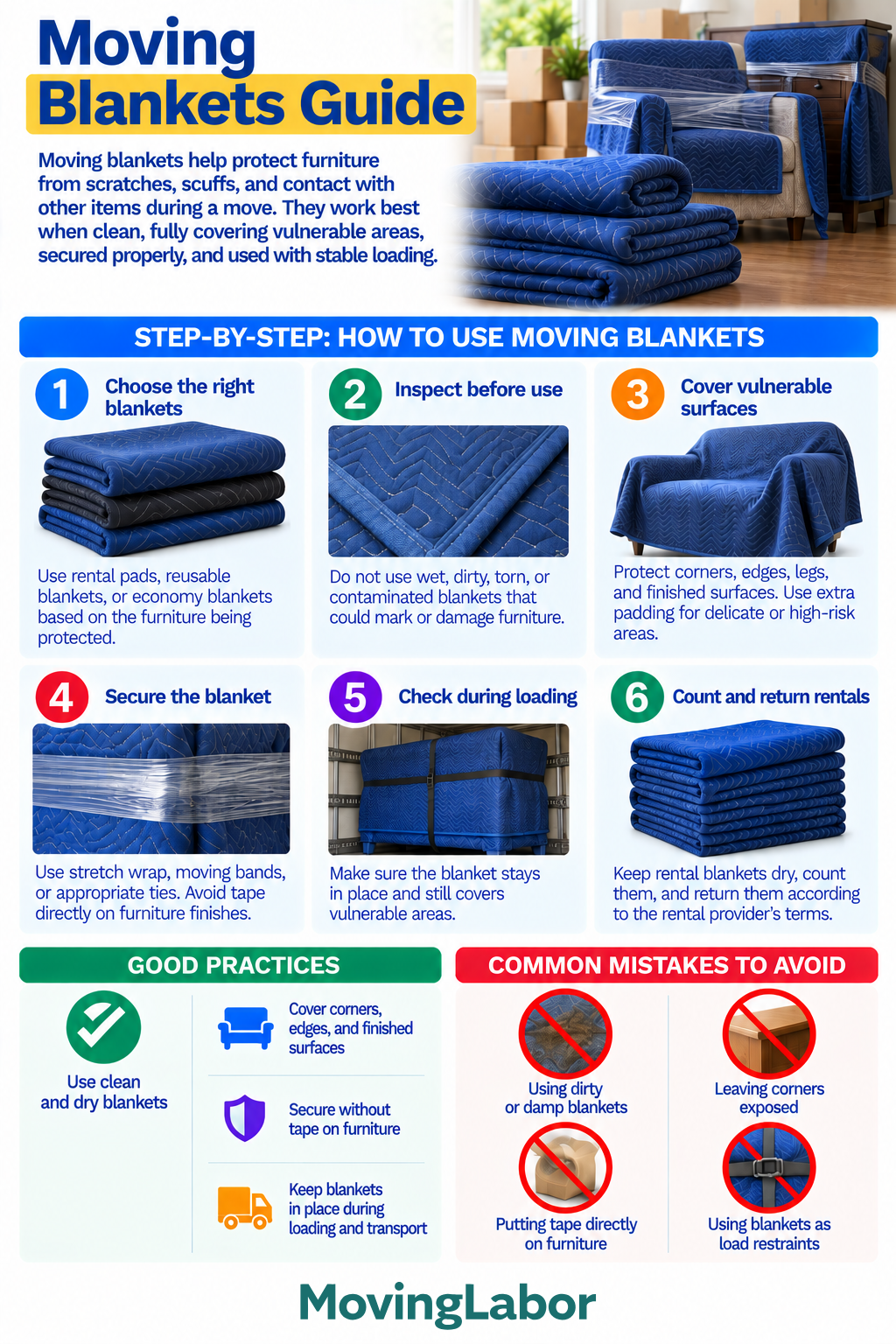
Moving blankets help protect furniture from scratches, scuffs, and contact with other items during a move. They work best when they are clean, large enough to cover vulnerable surfaces, secured so they stay in place, and used together with proper loading and load securement.
Use moving blankets on furniture and other suitable belongings with finished surfaces, exposed edges, or contact points that could be damaged during carrying, loading, or transportation.
Quick Answer
Use a moving blanket to cover the surfaces, edges, and corners most likely to make contact with walls, doorways, other furniture, or the moving vehicle.
Before wrapping an item:
- Make sure the blanket is clean and dry.
- Cover vulnerable surfaces and corners.
- Use additional padding where an item needs more protection.
- Secure the blanket with stretch wrap, bands, or appropriate ties.
- Avoid applying adhesive tape directly to furniture finishes.
- Check that the blanket remains in position before loading and securing the item.
Moving blankets provide padding, but they do not replace proper lifting, stable loading, or appropriate restraints.
Step-by-step plan
1. Choose the right moving blankets
Moving blankets vary in size, thickness, construction, and durability.
Common options include rental moving pads, reusable moving blankets, and lighter economy blankets. Choose based on the furniture being protected, the amount of handling involved, and whether the blankets will be reused.
Before moving day, count the furniture and other belongings you expect to pad rather than estimating from bedroom count alone.
Keep several additional blankets available for items that need extra coverage or padding.
2. Inspect blankets before use
Check each blanket before placing it against furniture.
Do not use blankets that are:
- Wet or damp
- Heavily soiled
- Contaminated
- Torn enough to expose the item
- Carrying debris that could scratch a surface
Pay particular attention when protecting light-colored upholstery or delicate finished surfaces.
3. Cover vulnerable surfaces
Drape or wrap the blanket so it protects the areas most likely to be bumped, rubbed, or pressed against another object.
Depending on the item, this may include:
- Corners
- Edges
- Finished faces
- Legs
- Arms
- Tops and sides
- Contact points between furniture pieces
Use additional appropriate protection for particularly vulnerable materials or features rather than assuming one blanket is sufficient for every item.
4. Secure the blanket
A moving blanket is less useful if it slips away from the surface it is protecting.
Depending on the item, blankets can be held in place with:
- Stretch wrap
- Moving bands
- Appropriate ties
Secure the covering firmly enough to stay in position without damaging the item.
Avoid placing adhesive tape directly on finished wood, upholstery, leather, painted surfaces, or other finishes that could be affected by the adhesive.
5. Check the padding during loading
Before carrying or loading the item, make sure the blanket has not shifted and exposed a corner or edge.
Check the covering again when furniture is positioned next to other belongings or secured inside the moving truck or container.
If straps or other restraints contact the furniture, keep appropriate padding between the restraint and vulnerable surfaces while making sure the load remains securely restrained.
6. Keep track of rental blankets
If the blankets are rented, count them when you receive them and again as they are removed during unloading.
Keep rental blankets separate from trash, disposable packing materials, and household linens.
Store them somewhere clean and dry until they are returned, and follow the rental provider's return requirements.
Decision checkpoints
- Before moving day: Count the furniture and other belongings that need padding and make sure enough clean blankets are available.
- Before wrapping each item: Inspect the blanket and identify the surfaces, corners, and edges that need protection.
- Before carrying the item: Check that the blanket is secured and will not interfere with safe handling.
- Before securing the load: Make sure blankets still cover vulnerable contact points and have not slipped.
- After unloading: Separate and count rental blankets before returning them.
Moving blanket checklist
- Enough blankets for the planned furniture
- Extra blankets available
- Blankets clean and dry
- Corners and edges covered
- Finished surfaces protected
- Additional padding used where appropriate
- Blankets secured before carrying
- No adhesive tape applied directly to furniture finishes
- Padding checked again after loading
- Load properly restrained
- Rental blankets counted and kept dry
Common mistakes to avoid
Using dirty or damp blankets
Dirt and debris can scratch surfaces, while moisture can transfer to furniture or upholstery. Inspect blankets before they touch the item.
Leaving corners exposed
A blanket covering the broad face of a dresser does little for an exposed corner that hits a doorway or another piece of furniture. Check the entire item before moving it.
Putting tape directly on furniture
Adhesive can leave residue or affect some finishes. Secure the blanket itself rather than taping directly to the furniture.
Assuming one blanket is enough for every item
Large furniture or pieces with vulnerable edges may require multiple blankets or additional protective materials.
Letting blankets shift during loading
Recheck the covering after carrying and positioning furniture. A blanket that slips below the contact area no longer protects that surface.
Treating blankets as load restraints
Moving blankets provide padding. They do not replace appropriate straps or other methods used to keep a load stable during transportation.
Where professional moving labor fits
Professional moving labor can help with furniture preparation, carrying, loading, and unloading.
Before the crew arrives, confirm whether moving blankets, stretch wrap, straps, and other protective materials are supplied by the moving labor provider or need to be provided separately.
If you are supplying the blankets, have enough clean pads available before furniture preparation begins. Also confirm whether furniture wrapping and preparation are included in the service you booked.
Use Professional packing help or the Move Inventory Builder to continue planning. For this guide, apply the result to the Choose blanket type and quantity step and confirm the final scope, availability, minimums, and price in writing.