Free Moving Labor Planner
Move Difficulty Score Calculator
Get a personalized difficulty score based on stairs,
access, truck-to-door distance, heavy items,
home size, and packing readiness.
- Free planning tool
- No obligation
- Helps estimate move complexity
- Useful before booking movers
How the Move Difficulty Score Calculator Works
Answer move difficulty questions.
Share your home size, access type, floors,
carry distance, heavy items,
and packing status.
Get a difficulty score.
The calculator weighs the factors that can
make a move easier, moderate,
or more difficult.
Plan the right moving help.
Use your score to understand whether your move
may need more time, extra movers,
or special preparation.
What Makes a Move More Difficult?
A move becomes more difficult when movers need more time,
extra care, or additional equipment
to complete the job safely.

Stairs
Stairs can increase labor time, effort,
and the need for careful handling.

Elevator Access
Elevators can help, but wait time,
building rules, and distance
can still affect the job.

Truck-to-Door Distance
Longer carry distances increase the time
and effort required for loading or unloading.

Heavy Items
Pianos, safes, appliances,
treadmills, and oversized furniture
may require extra movers or equipment.

Home Size
Larger homes usually mean more items,
more rooms, and more labor time.

Packing Readiness
A fully packed move is usually easier
and faster than a partially packed move.

Tight Spaces
Narrow hallways, tight corners,
and small staircases can slow the move down.

Parking and Building Rules
Limited parking, loading dock rules,
elevator reservations, or long walks
can increase difficulty.
What Your Move Difficulty Score Means
1.0 - 3.0
Easy Move
Usually simple access, small inventory, short carry distance, and no major heavy items.
4.0 - 6.0
Moderate Move
May include more rooms, some stairs, a medium carry distance, or a few heavier items.
7.0 - 8.0
Heavy Move
Often includes stairs, longer carry distance, heavy items, partial packing, or more complex access.
9.0 - 10.0
Very Difficult Move
May require extra movers, more time, specialty handling, or careful planning before moving day.
Your score is a planning guide, not a guaranteed quote. Actual time and crew needs can vary based on inventory, location, access, and availability.
Move Difficulty Examples
These examples show how different move conditions can affect the difficulty score and planning needs.

Easy Apartment Move
1-bedroom apartment, ground-floor access, short truck-to-door distance, fully packed
2.5 / 10
Likely manageable with a smaller crew and shorter labor window.
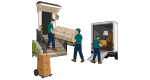
Moderate Townhome Move
2-bedroom home, stairs, medium carry distance, some heavy furniture
5.5 / 10
May require extra time and careful loading or unloading.

Heavy Multi-Level Move
3-bedroom home, multiple flights of stairs, long carry distance, heavy items, partial packing
8 / 10
May require a larger crew, more time, and preparation before movers arrive.
How Move Difficulty Affects Movers, Time, and Cost
Difficult access, heavy items, stairs, and long carry distance can increase the amount of time movers need to complete the job safely.
| Difficulty Level |
Typical Planning Impact |
| Easy |
Smaller crew and shorter labor window |
| Moderate |
Standard crew with some extra time |
| Heavy |
More time, more equipment, or extra movers may be needed |
| Very Difficult |
Larger crew, specialty planning, or longer labor window may be needed |
Use this as planning guidance. Your final crew and time recommendation should be based on actual inventory, access, and move-day details.
When to consider extra movers
If several of these conditions apply, a larger crew may help reduce delays, protect heavy items, and keep the move safer.
- Multiple flights of stairs
- Long distance from door to truck
- Large or heavy furniture
- Tight hallways or difficult access
- Partial packing or last-minute prep
- Time-sensitive loading or unloading
Best next step
Use the crew estimator to compare a smaller crew against a larger crew before requesting a quote.
Estimate Crew Size
How to Make a Difficult Move Easier
A little preparation can reduce labor time, lower stress, and help your movers work safely.
Pack boxes before movers arrive
Label boxes by room
Disassemble large furniture
Reserve elevator time
Clear hallways and doorways
Park the truck close to the entrance
Separate heavy or fragile items
Tell movers about specialty items
Measure tight stairways or doorways
Keep pets and children away from work areas
Ready to Turn Your Difficulty Score Into a Moving Labor Quote?
Use your move details to get a fast, free, no-obligation quote from trusted moving labor professionals.
Move Difficulty Score Calculator FAQs
How does the Move Difficulty Score Calculator work?
The calculator uses details such as home size, floors, access type, distance from the door to the truck, heavy or specialty items, and packing readiness to estimate how difficult your move may be.
Is the difficulty score a guaranteed estimate?
No. The score is a planning guide. Actual moving time, crew size, and cost can vary based on inventory, location, availability, building rules, parking, and move-day conditions.
What makes a move difficult?
Common difficulty factors include stairs, elevators, long carry distance, heavy items, tight spaces, large inventory, partial packing, limited parking, and building access rules.
Do stairs make a move more expensive?
Stairs can increase labor time and effort, which may affect the number of movers or hours needed. The final price depends on the actual move details and quote.
Does a long distance from the truck to the door matter?
Yes. A longer carry distance can add time because movers must walk farther with furniture, boxes, and heavy items during loading or unloading.
Do heavy items increase the difficulty score?
Yes. Items such as pianos, safes, appliances, treadmills, oversized sofas, and bulky furniture may require extra care, equipment, or additional movers.
Can packing readiness affect my moving time?
Yes. A fully packed and organized home usually moves faster than one with loose items, unfinished packing, or unclear room placement.
How can I lower my move difficulty?
You can make the move easier by packing ahead of time, clearing walkways, reserving elevators, placing the truck close to the entrance, disassembling large furniture, and telling movers about heavy items.
Can I use this calculator for loading and unloading?
Yes. The calculator is useful for loading, unloading, or both, especially when you want to understand access challenges and labor complexity before booking movers.
Can I book movers after checking my difficulty score?
Yes. After reviewing your difficulty score, you can request a MovingLabor quote based on your move details, location, and availability.