
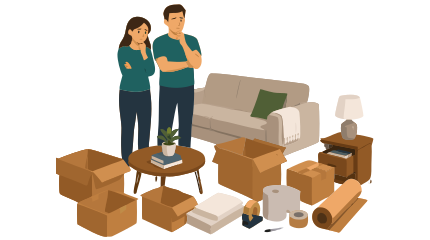

Choose your home size.
Start with your home size to estimate a basic supply list for your move.
Free Moving Checklist Tool
Estimate the boxes, tape, bubble wrap, packing paper, wardrobe boxes, markers, and other supplies you may need based on your home size and items.
Select any items that apply to your move.
100% Secure No obligation
Based on a 2 bedroom move with selected add-ons.
This is an estimate. Get your exact price based on your move details.
Next step
We can use this home size and packing list to start your MovingLabor quote.
Get Moving Labor Price
Start with your home size to estimate a basic supply list for your move.

Select fragile items, wardrobe clothes, electronics, artwork, books, and other packing needs.

Use the recommendation to buy supplies, prepare before movers arrive, and avoid last-minute packing delays.
The number of boxes and supplies you need depends on home size, item type, fragile belongings, clothing, books, electronics, and how organized your packing is.
Larger homes usually need more boxes, tape, and protective materials.
More loose items and small belongings increase the number of boxes needed.
Dishes, glassware, decor, and breakables may require paper, wrap, and extra padding.

Closets, formalwear, and hanging clothes may require wardrobe boxes.

TVs, monitors, computers, printers, and audio equipment may need extra protection.

Wall art, mirrors, frames, and glass items often require specialty packing.
Books are heavy and usually need smaller boxes to avoid overloading.
Careful packing may require more paper, wrap, tape, and labeling supplies.
| Supply | Used For | Planning Notes |
|---|---|---|
| Small Boxes | Books, pantry items, small decor, heavy items | Use for dense or heavy items so boxes stay manageable |
| Medium Boxes | Kitchen items, toys, household goods | Good all-purpose box for most rooms |
| Large Boxes | Linens, pillows, lampshades, lightweight items | Best for bulky but lighter items |
| Wardrobe Boxes | Hanging clothes, coats, formalwear | Useful for closets and clothing that should stay on hangers |
| Packing Paper | Dishes, glassware, fragile decor | Helps fill empty space and protect breakables |
| Bubble Wrap | Electronics, glass, artwork, delicate items | Useful for high-risk or fragile items |
| Tape | Sealing boxes and reinforcing bottoms | Most moves need multiple rolls |
| Markers / Labels | Room labels and fragile notes | Helps movers place boxes correctly |
| These are planning examples only. Use the calculator above for a personalized supply recommendation. | ||
These examples show how home size and item type can affect the amount of packing material needed.

Studio or 1-bedroom apartment with basic kitchen items, clothes, and boxes
Living room, bedrooms, kitchen, electronics, and moderate fragile items

Multiple bedrooms, kitchen, office, garage items, books, and fragile items
Extra padding and clear labels help reduce damage risk for fragile, delicate, or high-value items.
Movers can load or unload more efficiently when boxes are sealed, labeled, and ready before the crew arrives. Loose items, unfinished packing, and fragile items without protection can slow the job down.
| Packing Status | Typical Planning Impact |
|---|---|
| Fully Packed | Faster loading and fewer delays |
| Partially Packed | More time may be needed |
| Not Packed | Longer labor window and possible packing help needed |
| Fragile / Specialty Items | Extra care and materials may be required |
Finished packing before moving day helps movers focus on safe lifting, loading, and placement.
The more prepared the home is, the easier it is to keep loading and unloading time under control.
Better planning can reduce waste, avoid last-minute purchases, and help your move stay organized.
Use your packing supply list to prepare your move and get a fast, free moving labor quote.
The calculator uses details such as home size and selected item types, including fragile items, wardrobe clothing, electronics, artwork, and books, to estimate moving boxes and packing supplies.
The number of boxes depends on home size, how much you own, how many small items need to be packed, and whether you have fragile or specialty items. Use the calculator for a personalized estimate.
Common packing supplies include small, medium, and large boxes, wardrobe boxes, packing tape, bubble wrap, packing paper, markers, labels, and protective materials for fragile items.
Wardrobe boxes are helpful for hanging clothes, coats, formalwear, and closet items you want to keep on hangers during the move.
Most moves require multiple tape rolls. The amount depends on the number of boxes, whether boxes need reinforced bottoms, and how much repacking is needed.
Yes. Fragile items such as dishes, glassware, mirrors, artwork, and decor usually require packing paper, bubble wrap, extra padding, and careful labeling.
Yes. Books are heavy, so smaller boxes are usually better. Large boxes filled with books can become too heavy and harder to move safely.
Yes. A fully packed and labeled move usually takes less time than one with loose items, unfinished packing, or unclear room placement.
Packing help may be available depending on your location, move details, and service options. You can request pricing for packing, loading, unloading, or other labor-only moving help.
Yes. After reviewing your supply list, you can request a MovingLabor quote based on your move details, location, and availability.
 Moving Labor Cost
 Truck / Container Calculator