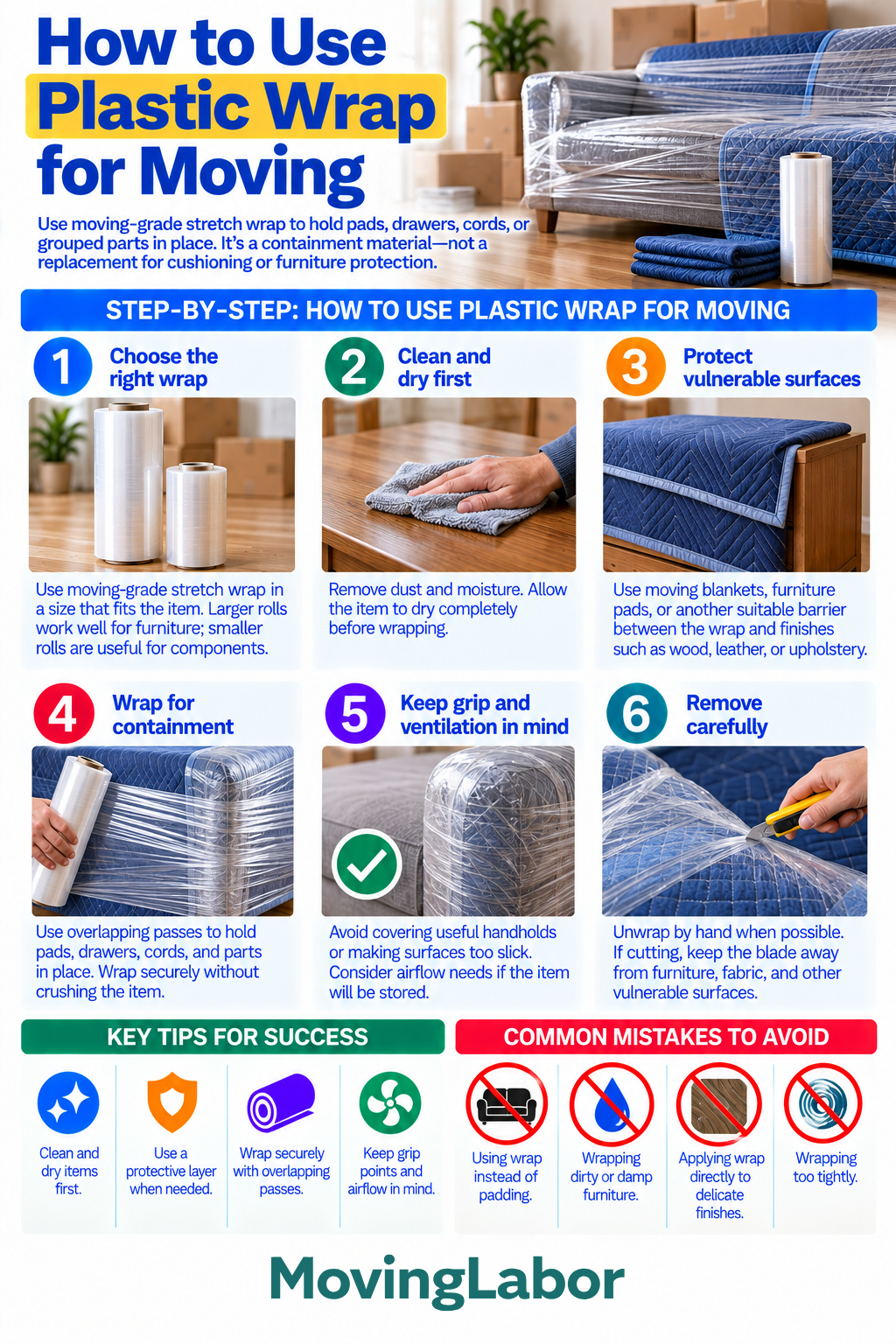
Moving-grade stretch wrap is useful for holding moving blankets, cords, drawers, doors, and grouped components in place. It is primarily a containment material, not a substitute for cushioning or furniture protection.
Before wrapping furniture, make sure the item is clean and dry and determine whether the surface needs a compatible protective layer between it and the plastic wrap.
Quick Answer
Use stretch wrap to secure protective materials and contain movable components during a move.
For most items:
- Clean and dry the surface first.
- Protect vulnerable finishes with moving blankets or another suitable barrier.
- Wrap over the protective layer when appropriate.
- Overlap passes enough to keep the covering secure.
- Avoid wrapping so tightly that furniture or cushions deform.
- Keep necessary handholds accessible.
- Consider airflow and moisture before leaving items wrapped in storage.
- Remove the wrap carefully without cutting toward the item.
Do not assume plastic wrap can replace moving blankets, cushioning, or other impact protection.
Step-by-step plan
1. Choose appropriate stretch wrap
Use stretch wrap intended for moving or packing rather than ordinary household food wrap.
Choose a roll size that is practical for the item being wrapped. Larger rolls can be useful for furniture, while smaller rolls may be easier for cords, components, or smaller belongings.
The wrap should contain and secure the item without requiring excessive tension.
2. Clean and dry the item
Before wrapping, remove dust, dirt, and moisture from the furniture or other item.
Wrapping over dirt can trap abrasive particles against a surface, while wrapping damp belongings can trap existing moisture.
Allow cleaned items to dry completely before covering them.
3. Protect vulnerable surfaces
Stretch wrap should not automatically be placed directly against every furniture surface.
Depending on the material, use a suitable protective layer such as:
- Moving blankets
- Furniture pads
- Appropriate paper or surface protection
- Another compatible barrier
Pay particular attention to finished wood, leather, upholstery, painted surfaces, and other materials that may be sensitive to prolonged contact, pressure, heat, or trapped moisture.
Follow manufacturer care instructions when applicable.
4. Wrap for containment
Use overlapping passes to keep protective coverings and movable components contained.
Stretch wrap can be useful for securing:
- Moving blankets
- Furniture pads
- Cords
- Remotes or appropriately protected components
- Doors and drawers
- Grouped furniture parts
Do not rely on stretch wrap alone to secure a component that could detach or cause damage during transportation.
Avoid excessive tension. Wrap should hold protection in place without crushing cushions, bending panels, or placing unnecessary pressure on furniture.
5. Maintain safe handling and airflow
Think about how the item will be carried after it is wrapped.
Avoid covering useful grip points when doing so would make the furniture harder to control. Smooth plastic can also make some surfaces more difficult to grip.
If an item will remain wrapped during storage, consider its material and the storage environment. Avoid creating a sealed condition that could trap existing moisture or conflict with the item's storage or manufacturer guidance.
6. Remove the wrap carefully
Take care when removing stretch wrap from furniture.
Unwrap it by hand where practical. If a cutting tool is necessary, keep the blade pointed away from the item and avoid cutting blindly through layers.
Be especially careful around:
- Upholstery
- Leather
- Finished wood
- Cords
- Fabric
- Moving blankets
- Other vulnerable surfaces
Decision checkpoints
- Before wrapping: Make sure the item is clean and completely dry.
- Before direct contact: Determine whether the material needs a protective barrier beneath the wrap.
- While wrapping: Check that pads and components remain properly positioned.
- Before carrying: Make sure the wrap is secure without making useful grip areas unnecessarily slippery or inaccessible.
- Before storage: Consider moisture, airflow, storage duration, and the item's material.
- During removal: Keep cutting tools away from the furniture and other protected surfaces.
Stretch wrap checklist
- Moving-grade stretch wrap available
- Furniture clean and dry
- Surface material considered
- Moving blankets or other protection added where appropriate
- Vulnerable corners and edges protected
- Wrap overlapped securely
- No excessive compression
- Loose components properly contained
- Cords organized
- Useful handling points considered
- Storage conditions considered
- Cutting tools used carefully during removal
Common mistakes to avoid
Using plastic wrap instead of padding
Stretch wrap can hold moving blankets and other protection in place, but the film itself provides limited protection from impact.
Wrapping dirty or damp furniture
Dirt can become trapped against surfaces, while existing moisture can remain under the wrap. Clean and dry belongings before wrapping.
Applying wrap directly to every surface
Furniture materials differ. Use an appropriate protective barrier when direct plastic contact may be unsuitable for the finish or storage conditions.
Wrapping too tightly
Excessive tension can compress cushions or place unnecessary pressure on panels and other vulnerable components.
Making furniture difficult to grip
Covering every surface with smooth plastic can make some items harder to control. Account for how the piece will actually be carried.
Leaving furniture tightly wrapped for storage without considering moisture
Transportation wrapping and longer-term storage are different situations. Consider the furniture material, airflow, moisture, storage conditions, and manufacturer guidance before leaving an item sealed in plastic.
Where professional moving labor fits
Professional moving labor can help protect furniture with moving blankets and stretch wrap before carrying and loading it.
Before booking, confirm whether the crew provides stretch wrap, moving blankets, furniture pads, and other protective materials or whether you need to supply them.
If you prepare furniture yourself, make sure protective coverings are secure before the crew arrives and identify pieces with delicate finishes, glass, unusual materials, or manufacturer-specific handling requirements.
Use Professional packing help or the Move Inventory Builder to continue planning. For this guide, apply the result to the Choose the right film step and confirm the final scope, availability, minimums, and price in writing.