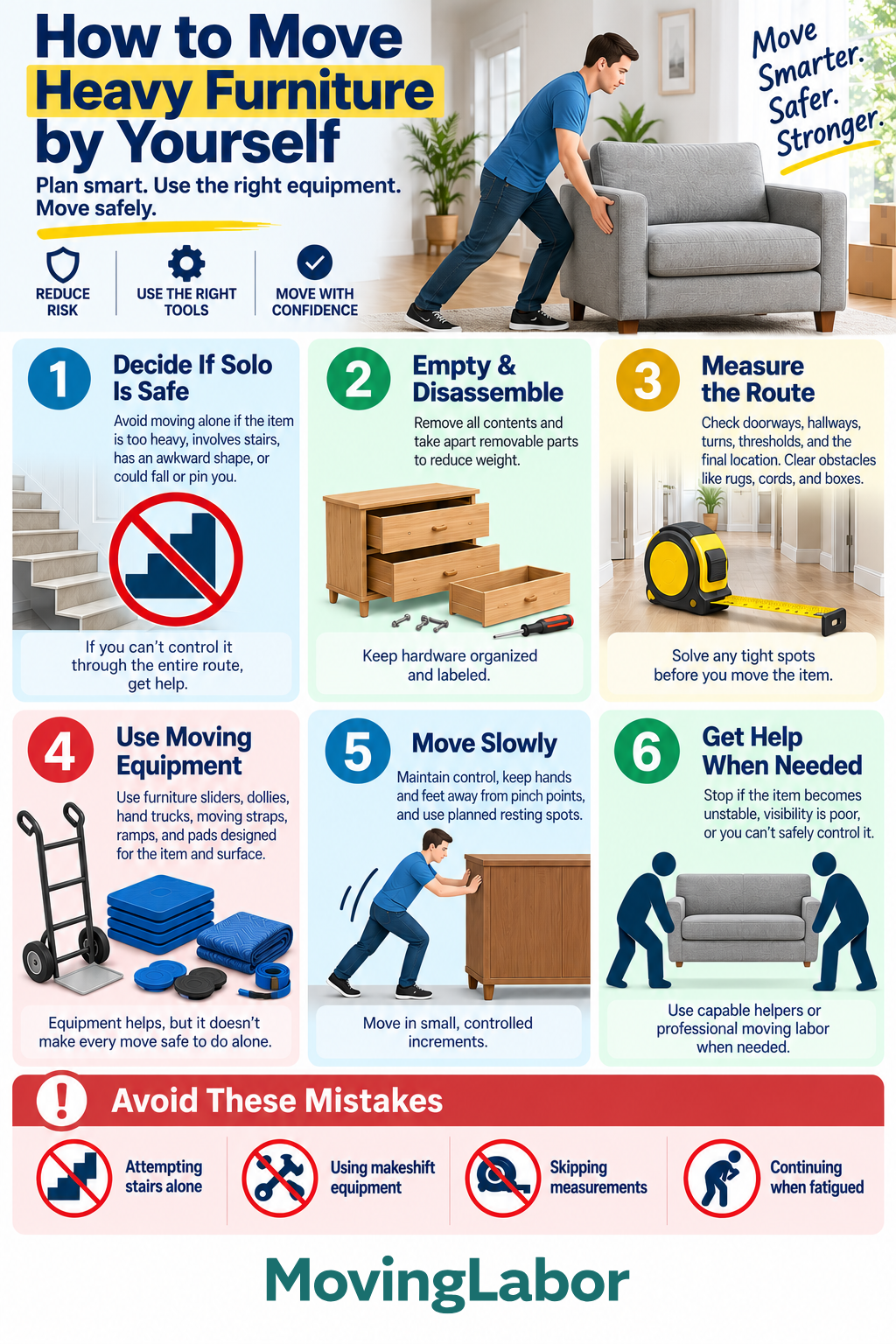
Moving heavy furniture completely alone is often unsafe. The practical goal is to reduce the weight, use appropriate moving equipment, eliminate hazards, and stop whenever you cannot safely control the item through the entire route.
This guide covers four important decisions in the loading and unloading process: decide whether solo moving is reasonable, empty and disassemble the furniture, measure the route, and use mechanical aids. Safe loading and unloading is not just about getting an item through a doorway or onto a truck. You need to maintain control of the furniture, protect yourself and surrounding surfaces, and avoid situations where the item could tip, fall, or pin you.
Quick Answer
Before trying to move heavy furniture by yourself, decide whether the item and route can be handled safely by one person. Empty and disassemble the furniture where possible, measure the entire route, and have the appropriate moving equipment ready before you start.
If the route involves stairs, tight turns, poor footing, significant lifting, or an item you cannot safely steer and stop, get additional help rather than attempting the move alone.
Step-by-step plan
1. Decide whether solo is reasonable
Evaluate the furniture and the entire route before moving anything.
Do not attempt to move an item alone if the job involves stairs, an unstable or awkward shape, excessive weight, limited grip, valuable or easily damaged finishes, or any situation where the furniture could fall or pin you.
You should be able to control the item while starting, stopping, turning, and setting it down. If you cannot, the move requires additional help.
2. Empty and disassemble
Remove everything from drawers, cabinets, shelves, and other storage areas before moving the furniture.
When the manufacturer permits it, remove detachable components such as shelves, drawers, legs, cushions, or other parts. Reducing the item's weight can make it easier to control and can prevent loose components from opening, shifting, or falling during the move.
Keep hardware organized and label removed parts so the furniture can be reassembled correctly.
3. Measure the route
Measure the furniture and check the entire path to its destination before you begin moving it.
Confirm:
- Doorway widths and heights
- Hallways and tight turns
- Stairways and landings
- Elevators, if applicable
- Thresholds and floor transitions
- Entry doors and truck or storage-unit access
- The furniture's final position
Also remove boxes, rugs, cords, and other obstacles that could create a tripping or slipping hazard.
If the furniture will not safely clear part of the route, solve the problem before moving it into that area.
4. Use mechanical aids
The right equipment can reduce the amount of lifting and force required.
Depending on the item and route, useful equipment may include furniture sliders, furniture dollies, hand trucks, moving straps, leverage tools, ramps, and moving pads.
Choose equipment designed for the item's weight and the surface where it will be used. Keep loads balanced and secure, and do not exceed the equipment manufacturer's rated capacity.
Mechanical aids can make a manageable move easier, but they do not make every heavy item safe to move alone.
5. Move in controlled increments
Move slowly and maintain control rather than relying on momentum.
Keep your hands and feet away from pinch and crush points, especially around doorways, walls, thresholds, wheels, and the bottom of the furniture. Never place yourself underneath an unsupported item.
Plan safe stopping points along the route so you do not have to continue moving when tired or losing control.
If the furniture is being loaded into a moving truck or container, make sure it is stable before releasing it and secure it appropriately for transit.
6. Call for help early
Do not wait until the furniture is already stuck, tipping, or difficult to control before asking for help.
Stop if you encounter unexpected weight, poor visibility, unstable balance, inadequate traction, an unsafe lifting position, or a section of the route that cannot be navigated safely.
Additional capable helpers or professional moving labor can be safer than trying to force an item through a difficult part of the move alone.
Decision checkpoints
Before moving heavy furniture, confirm three things:
- Before moving the item: Decide whether you can safely control it throughout the entire route.
- Before lifting or sliding: Make sure the furniture is emptied or disassembled where appropriate and that the correct moving equipment is ready.
- Before entering a difficult section: Stop and get help if stairs, tight turns, thresholds, poor traction, or limited visibility make control uncertain.
Move-day checklist
- Decide whether the item is reasonable to move alone
- Empty drawers, cabinets, and shelves
- Remove approved detachable parts
- Measure the furniture and the complete route
- Clear obstacles and tripping hazards
- Protect floors, walls, doors, and furniture surfaces
- Have appropriate moving equipment ready
- Plan safe resting and stopping points
- Keep hands and feet away from pinch and crush zones
- Stop and get help if you cannot maintain control
Common mistakes to avoid
Attempting stairs alone
Stairs significantly increase the difficulty of controlling heavy furniture. If an item must travel up or down stairs and you cannot safely control its weight and movement, use capable helpers or professional moving labor.
Using a makeshift ramp or unstable leverage point
Improvised equipment can shift, collapse, or slip unexpectedly. Use moving equipment appropriate for the item, surface, and task instead of relying on unstable substitutes.
Skipping route measurements
An item that fits through one doorway may still become stuck at a hallway turn, stair landing, elevator, or other narrow point. Measure the entire route before moving the furniture.
Continuing after fatigue, pain, or loss of control
Fatigue can reduce grip, balance, and control. Stop if you experience pain, excessive fatigue, or difficulty controlling the item. Do not try to finish a difficult section simply because the move has already started.
Where professional moving labor fits
Professional moving labor can be useful when you need help loading or unloading heavy furniture but are handling other parts of the move yourself.
When requesting help, provide information about the furniture, difficult or unusually heavy items, stairs, elevators, long carries, tight access, the moving truck or container being used, and any other conditions that could affect the work. Photos of difficult items and access areas can also help the moving crew understand the job before arrival.
Use Heavy-item moving help or the Move Difficulty Score Calculator to continue planning. For this guide, apply the result to the Decide whether solo is reasonable step and confirm the final scope, availability, minimums, and price in writing.