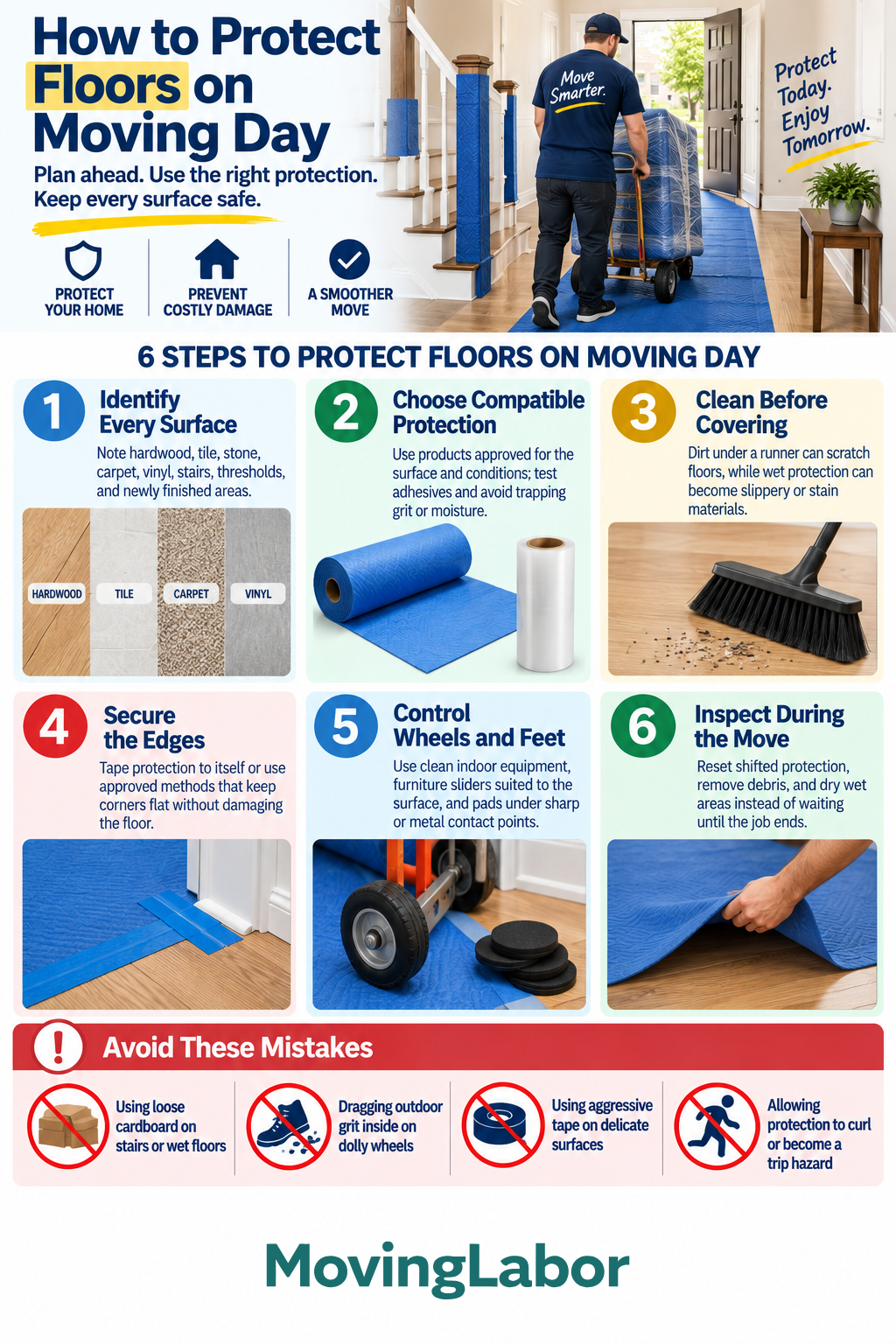
Protect floors with clean, secured, surface-appropriate runners or panels, dedicated indoor dollies, dry pathways, and careful threshold transitions. Floor protection should stay flat and secure without sliding, transferring dye, trapping debris, or creating a trip hazard.
This guide covers four important decisions in the Loading & Unloading plan: identify every surface, choose compatible protection, clean before covering, and secure the edges. The goal is to protect floors throughout the carrying route without introducing new slipping, tripping, or surface-damage risks.
Quick Answer
Start by identifying every flooring surface along the moving route, including stairs and thresholds. Then choose protection appropriate for each surface and clean the floor before covering it.
Secure runners or other protection so edges remain flat and walking surfaces stay stable. During the move, check protection regularly for shifting, moisture, dirt, or damage.
Step-by-step plan
1. Identify every surface
Note hardwood, tile, stone, carpet, vinyl, stairs, thresholds, and newly finished areas throughout the moving route.
Different surfaces may require different protection, so check the entire path before loading or unloading begins.
2. Choose compatible protection
Use floor-protection products appropriate for the surface and conditions. Follow product instructions, particularly when using adhesive-backed materials.
Test adhesives when appropriate and avoid materials that could transfer dye, trap moisture, or damage the finish.
3. Clean before covering
Sweep or vacuum the route before installing floor protection.
Dirt and grit trapped beneath a runner can scratch hard floors. Moisture beneath or on top of protection can also create slipping, staining, or surface-damage risks.
4. Secure the edges
Keep runners, panels, and other protection flat and secure throughout the route.
Tape protection to itself or use a securing method appropriate for the flooring. Avoid applying tape or adhesive directly to delicate or newly finished surfaces unless the product is approved for that use.
5. Control wheels and feet
Keep dolly wheels, furniture sliders, equipment, and footwear as clean as practical when moving between outdoor and indoor areas.
Use sliders appropriate for the flooring and protective pads where furniture legs, metal components, or sharp contact points could scratch or dent the surface.
6. Inspect during the move
Check floor protection periodically instead of waiting until loading or unloading is complete.
Reset anything that shifts or curls, remove tracked-in debris, and dry wet areas promptly. Replace damaged protection when it can no longer provide a stable surface.
Decision checkpoints
- Before installing protection: Identify every flooring type and choose compatible materials.
- Before moving furniture: Make sure floors are clean and protection is flat, dry, and secure.
- During loading or unloading: Check for shifted runners, curled edges, debris, moisture, and dirty equipment.
Move-day checklist
- Identify every flooring surface along the route
- Sweep or vacuum before installing protection
- Use protection appropriate for each surface
- Keep runners and panels flat and secure
- Check stairs and thresholds carefully
- Keep dolly wheels and moving equipment clean
- Use surface-appropriate furniture sliders
- Protect against sharp or metal contact points
- Remove tracked-in dirt and moisture promptly
- Inspect and reset protection throughout the move
Common mistakes to avoid
Using loose cardboard on stairs or wet floors
Loose cardboard can shift, curl, or become slippery. Use stable, surface-appropriate protection and secure it properly.
Bringing outdoor grit inside on dolly wheels
Dirt and small debris caught under wheels can scratch flooring. Check and clean wheels before moving equipment across protected indoor surfaces.
Applying aggressive tape directly to delicate floors
Some adhesives can leave residue or affect floor finishes. Use products appropriate for the surface and follow the manufacturer's instructions.
Ignoring protection that has shifted
A runner that curls, slides, bunches up, or becomes wet can create a new hazard. Stop and correct the protection before continuing through that area.
Where professional moving labor fits
Professional moving labor can provide the crew for planned loading or unloading and help manage furniture through protected carrying routes.
Share difficult-item photos, flooring and access conditions, stairs, thresholds, equipment needs, and other relevant details before the job. This helps the crew understand the route and determine what equipment or preparation may be needed.
Use Professional loading help or the Move Difficulty Score Calculator to continue planning. For this guide, apply the result to the Identify every surface step and confirm the final scope, availability, minimums, and price in writing.