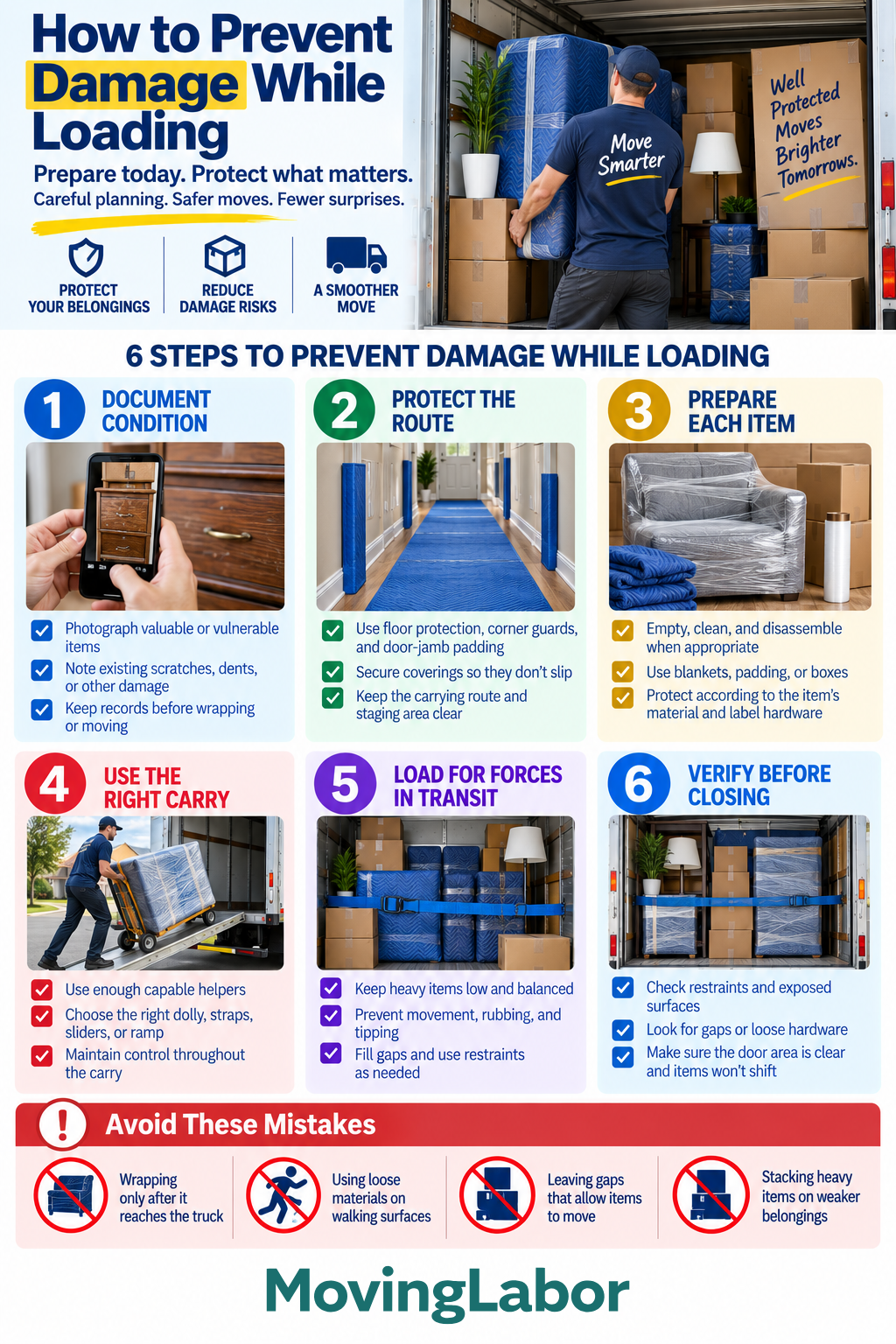
Prevent loading damage by preparing items before movement, protecting the route and furniture, using controlled carries, building a stable load, and securing items for transit. Many preventable problems begin during preparation and loading, before the moving truck ever leaves.
This guide covers four important decisions in the Loading & Unloading plan: document condition, protect the route, prepare every item, and use the right carry. The goal is not simply to fit everything inside the truck or container. Items need to remain controlled through the route, protected from contact damage, positioned appropriately, and secured against movement during transit.
Quick Answer
Start by documenting the condition of valuable or vulnerable belongings. Then protect the route and prepare items for handling before loading begins.
Make sure appropriate moving equipment and enough capable helpers are available for difficult items. Inside the truck or container, minimize movement, rubbing, tipping, and unstable stacking before closing the load.
Step-by-step plan
1. Document condition
Photograph valuable, fragile, or vulnerable items before wrapping or moving them.
Record existing scratches, dents, cracks, stains, or other visible damage. Photos can also help document an item's condition before loading and its placement inside the moving truck or container.
2. Protect the route
Protect floors, walls, corners, and doorways where furniture or equipment could make contact.
Use appropriate floor protection, corner guards, door-jamb protection, and adequate lighting. Secure floor coverings so they do not slide, bunch up, or become a tripping hazard.
Keep the carrying route and staging area clear.
3. Prepare each item
Prepare belongings according to the item's material, construction, and manufacturer guidance.
When appropriate, empty contents, remove approved detachable parts, secure doors and drawers, and use moving blankets, padding, stretch wrap, boxes, or other suitable protection.
Keep removed hardware organized and labeled.
4. Use the right carry
Choose enough capable helpers and appropriate moving equipment for the item's weight, dimensions, route, and surface.
Depending on the situation, that may include a furniture dolly, hand truck, moving straps, sliders, or a suitable ramp.
Maintain control throughout the carry rather than relying on speed or momentum.
5. Load for forces in transit
Arrange the load with transportation in mind, not just the initial loading process.
Protect items from vibration, braking, turns, rubbing, shifting, tipping, and excessive vertical pressure. Keep heavy items appropriately positioned, avoid unstable stacks, protect hard surfaces from direct contact, control gaps where items could shift, and use suitable restraints where needed.
6. Verify before closing
Inspect the load before closing the moving truck, trailer, or container.
Check restraints, exposed surfaces, loose hardware, unstable stacks, gaps that could allow movement, and items that could roll or tip.
Make sure the door area is clear and that nothing is likely to shift into the door during transit.
Decision checkpoints
- Before loading begins: Photograph valuable or vulnerable items and protect the carrying route.
- Before moving difficult items: Confirm that enough capable helpers and appropriate moving equipment are available.
- Before closing the load: Check placement, padding, gaps, restraints, stability, and the door area.
Move-day checklist
- Document existing damage on valuable or vulnerable items
- Protect floors, walls, corners, and doorways
- Secure floor protection against slipping or bunching
- Prepare and protect furniture before carrying it
- Keep hardware and removable parts organized
- Clear and secure the ramp and carrying route
- Use appropriate moving equipment and enough helpers
- Protect hard surfaces from rubbing against each other
- Keep the load balanced and stable
- Check restraints and the door area before transit
Common mistakes to avoid
Wrapping furniture only after it reaches the truck
Furniture can be scratched or damaged while traveling through the home, doorway, hallway, or loading ramp. Apply appropriate protection before the item enters the carrying route.
Using loose cardboard or plastic on walking surfaces
Unsecured materials can slide, bunch up, or create a tripping hazard. Use suitable floor protection and secure it appropriately.
Leaving gaps that allow items to move
Open space can allow furniture and boxes to shift, tip, or rub against nearby items during transit. Build a stable load, protect contact points, control gaps, and use appropriate restraints.
Stacking heavy items on weaker belongings
Excessive vertical pressure can crush cartons, furniture, or other belongings. Keep dense weight appropriately positioned and avoid unstable or top-heavy stacks.
Where professional moving labor fits
Professional moving labor can provide the crew for planned loading or unloading work, particularly when heavy, bulky, or difficult items require additional people or moving equipment.
Share the inventory, difficult-item photos, access conditions, stairs, equipment type, and moving truck or container information before the job. This helps the crew understand the route and loading requirements rather than relying only on a general room count.
Use Professional loading help or the Move Inventory Builder to continue planning. For this guide, apply the result to the Document condition step and confirm the final scope, availability, minimums, and price in writing.