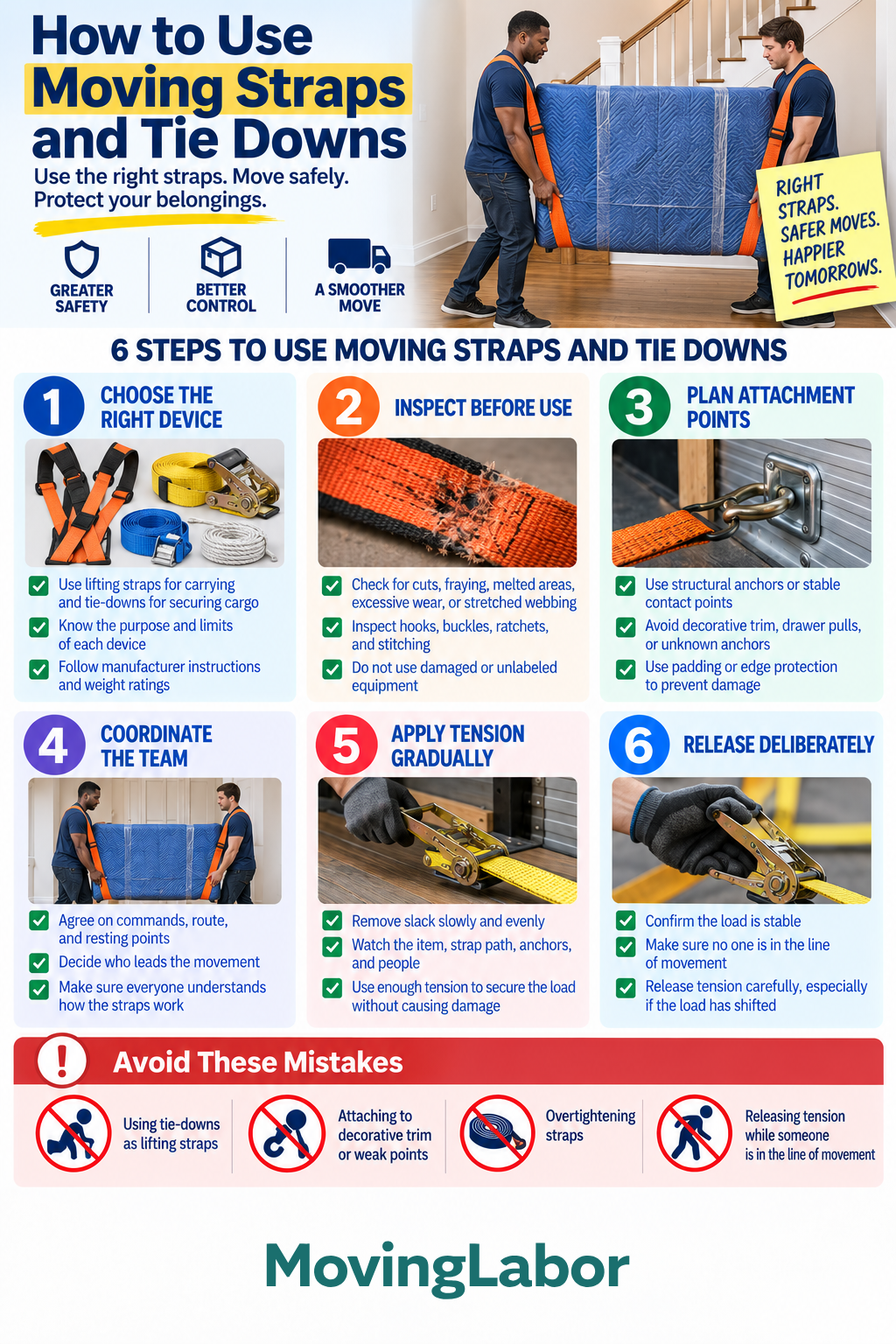
Moving straps and tie-downs serve different purposes. Body-worn lifting straps can help people control certain items during a carry, while cargo tie-downs are used to secure items during transport. Match the device to the task, inspect it before use, protect furniture from pressure and abrasion, use appropriate attachment points, and never exceed the equipment manufacturer's working load limit.
This guide covers four important decisions in the Loading & Unloading plan: choose the right device, inspect before use, plan attachment points, and coordinate the team. During loading and unloading, the goal is to maintain control of each item, protect surfaces, distribute forces appropriately, and keep cargo stable during transit.
Quick Answer
Start by identifying whether you need a lifting strap for carrying or a tie-down for securing cargo. Inspect the equipment and check its instructions, ratings, and attachment method before use.
Plan the strap path and attachment points before lifting or applying tension. If the equipment, anchor point, furniture, or route is unsuitable, stop and choose another method rather than improvising.
Step-by-step plan
1. Choose the right device
Lifting straps, shoulder harnesses, ratchet straps, cam straps, and rope are not interchangeable.
Use body-worn lifting equipment only as designed for carrying, and use cargo tie-downs designed and rated for securing loads during transport. Follow the manufacturer's instructions and working load limits.
2. Inspect before use
Check straps, hooks, ratchets, buckles, stitching, and other components before use.
Do not use equipment that is cut, frayed, melted, excessively stretched, corroded, jammed, missing required identification, or otherwise damaged.
3. Plan attachment points
For cargo tie-downs, use suitable structural cargo anchors rather than decorative trim, handles, drawer pulls, or unknown attachment points.
Position straps so they will not slip or damage the item. Use moving pads or edge protection where pressure, friction, or sharp edges could damage the strap or furniture.
4. Coordinate the team
Before using lifting straps with another person, agree on commands, the route, stopping points, and who will lead the movement.
Both people should understand how the lifting system works before putting the item under load.
5. Apply tension gradually
For tie-downs, remove slack gradually and watch the cargo, strap path, anchor points, and surrounding area as tension increases.
Use enough tension to secure the load without crushing furniture, damaging components, or exceeding the limits of the strap or anchor.
6. Release deliberately
Before releasing a tie-down, confirm that the item is stable and that nobody is in its potential path of movement.
Support the item when necessary and release tension carefully, especially if the cargo may have shifted during transit.
Decision checkpoints
- Before using the equipment: Confirm that the strap or tie-down is intended for the task and is in usable condition.
- Before lifting or tensioning: Confirm the route, attachment points, strap path, padding, and communication plan.
- Before releasing tension: Make sure the item is stable and people are clear of its potential path of movement.
Move-day checklist
- Choose the correct lifting strap or cargo tie-down
- Inspect straps, hooks, buckles, ratchets, and stitching
- Check manufacturer instructions and load ratings
- Verify suitable attachment or anchor points
- Protect furniture and strap contact points
- Clear and secure the carrying or loading route
- Coordinate commands when working with another person
- Apply tie-down tension gradually
- Check that cargo is stable before transit
- Release tension only when the item is stable
Common mistakes to avoid
Using cargo tie-downs as body-worn lifting straps
Cargo restraints and lifting systems are designed for different purposes. Do not improvise a lifting system with equipment that is not intended for carrying furniture.
Hooking to decorative trim, a drawer pull, or an unknown anchor
Use suitable structural cargo anchors and stable contact points. An inappropriate attachment point can break, release, or damage the furniture.
Overtightening tie-downs
More tension is not always better. Excessive force can damage furniture, straps, or attachment points. Apply tension gradually and follow the equipment manufacturer's limits.
Releasing tension while someone is in the line of movement
Cargo can shift during transportation. Confirm that the item is stable and keep people clear of its potential movement before loosening a tie-down.
Where professional moving labor fits
Professional moving labor can provide additional help when furniture or other heavy items require multiple people to load, unload, or control safely.
Share the inventory, difficult-item photos, access conditions, stairs, moving equipment, and truck or container information before the job. This gives the crew an opportunity to evaluate the work and equipment needs rather than relying only on a room count.
Use Professional loading help or the Move Inventory Builder to continue planning. For this guide, apply the result to the Choose the right device step and confirm the final scope, availability, minimums, and price in writing.