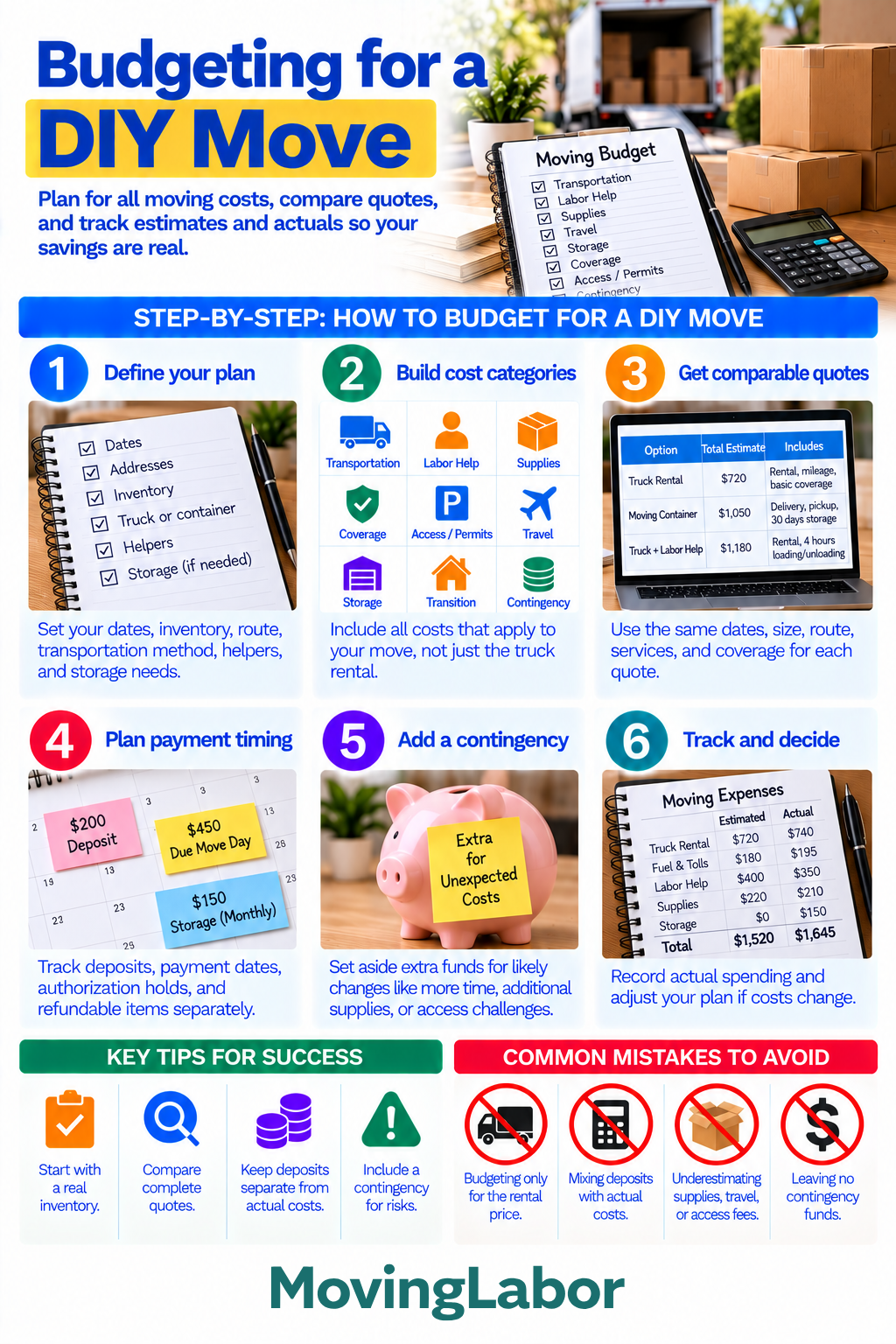
A realistic DIY moving budget includes more than a truck rental or moving container. Account for transportation, fuel, moving labor, packing supplies, travel, property access, storage, coverage, and unexpected expenses.
The goal is to estimate the total cost of your move, understand when payments are due, and avoid surprises that reduce your expected savings.
Quick Answer
To create a DIY moving budget, start with your inventory, moving distance, dates, and transportation method.
Include these main cost categories:
- Transportation: Truck or container rental, mileage, fuel, tolls, and equipment charges.
- Moving labor: Optional packing, loading, unloading, or heavy-item assistance.
- Packing supplies: Boxes, tape, cushioning, moving blankets, and specialty protection.
- Coverage: Applicable rental protection, damage waivers, or other coverage options.
- Property access: Parking, permits, elevators, and building-related charges.
- Travel: Meals, lodging, and other necessary travel expenses.
- Storage: Temporary storage and related delivery or access charges.
- Transition costs: Cleaning, utility overlap, and destination setup.
- Contingency: Extra funds for reasonably foreseeable changes or delays.
Keep refundable deposits and temporary payment holds separate from actual moving expenses.
Step-by-step plan
1. Define your moving plan
Establish the details that affect cost before comparing moving options.
Identify:
- Moving date and destination
- Approximate moving distance
- Household inventory
- Truck or container size
- Number of available helpers
- Packing responsibilities
- Storage requirements
- Property access restrictions
Declutter and estimate your inventory before selecting transportation equipment. An undersized truck or container can create additional trips, equipment changes, or schedule problems.
2. Build your moving budget
Separate costs into categories so you can identify missing expenses.
| Category |
Expenses to consider |
| Transportation |
Rental, mileage, fuel, tolls, equipment |
| Moving labor |
Loading, unloading, packing, minimum hours |
| Packing supplies |
Boxes, tape, padding, specialty cartons |
| Coverage |
Optional protection and applicable charges |
| Property access |
Parking, permits, elevator fees |
| Travel |
Meals, lodging, transportation |
| Storage |
Rental, delivery, pickup, additional time |
| Transition |
Cleaning, utility overlap, setup |
| Contingency |
Extra time, supplies, delays |
Not every move requires every category. Include the expenses that apply to your specific plan.
3. Compare complete moving costs
When comparing rental trucks, moving containers, or other DIY options, use the same inventory, dates, route, and service assumptions.
Check the full estimated price, including:
- Base rental or transportation charges
- Mileage or distance-related costs
- Fuel responsibility
- Equipment and accessory rentals
- Coverage options
- Additional rental days
- Delivery and pickup charges where applicable
- Labor assistance
A lower advertised rate does not necessarily mean a lower total moving cost.
4. Plan payment timing
Some moving expenses must be paid before moving day, while others are charged during or after the move.
Track:
- Reservation payments
- Deposits
- Payment authorization holds
- Final rental charges
- Labor payment schedules
- Storage billing dates
- Expected refunds
A refundable deposit may not be a permanent expense, but it can temporarily reduce the money available for other moving costs.
Confirm payment and refund terms with each provider.
5. Add a practical contingency
Unexpected expenses can arise from changes in inventory, travel, equipment needs, property access, or scheduling.
Consider setting aside additional funds for:
- Extra rental time
- Additional fuel or mileage
- More packing supplies
- Additional labor hours
- Parking or access complications
- Delayed unloading or storage
Base your contingency on the uncertainties in your move rather than treating it as a substitute for estimating known expenses.
6. Track actual spending
Record expenses as reservations are confirmed and payments are made.
Compare the original estimate with actual spending to identify changes early.
Pay particular attention to rental extensions, additional labor hours, storage renewals, and other charges that may increase over time.
After the move, account for equipment returns, final charges, deposits, and refunds before calculating the final cost.
Decision checkpoints
- Before booking transportation: Confirm inventory, distance, dates, and equipment size.
- Before comparing quotes: Include the same services, equipment, and likely additional charges.
- Before paying deposits: Check payment timing, cancellation terms, and refund conditions.
- Before moving day: Confirm labor costs, access arrangements, travel expenses, and contingency funds.
- Before returning equipment: Check rental deadlines, fuel requirements, and return conditions.
- After the move: Reconcile final charges and refunds to determine actual spending.
DIY moving budget checklist
- Moving inventory estimated
- Transportation method selected
- Rental or container costs recorded
- Mileage charges checked
- Fuel estimated
- Tolls considered
- Moving labor estimated
- Packing supplies included
- Equipment rentals included
- Coverage options reviewed
- Parking and permits checked
- Building access fees considered
- Travel expenses estimated
- Storage costs included if needed
- Cleaning and transition costs considered
- Deposits tracked separately
- Payment deadlines recorded
- Contingency funds available
- Final expenses and refunds reconciled
Common mistakes to avoid
Budgeting only for the rental price
Truck or container rental is just one part of a DIY move. Fuel, labor, supplies, equipment, travel, and other charges can materially affect the total.
Estimating before reviewing your inventory
An inaccurate inventory can lead to the wrong equipment size, additional trips, or unexpected transportation expenses.
Comparing quotes with different assumptions
A quote that excludes labor, coverage, mileage, or equipment is not directly comparable with one that includes those services.
Treating refundable deposits as permanent expenses
Track deposits and authorization holds separately from actual costs while accounting for their temporary effect on available funds.
Forgetting destination expenses
Unloading, temporary storage, cleaning, equipment return, and initial setup can create expenses after transportation is complete.
Leaving no room for changes
Additional rental time, labor hours, supplies, or access complications can increase spending. Set aside contingency funds based on the risks in your plan.
Where professional moving labor fits
Hiring professional moving labor can be a useful middle ground between completing every task yourself and booking a full-service move.
You may choose to handle transportation while hiring movers for:
- Loading a rental truck or moving container
- Unloading at the destination
- Heavy or bulky furniture
- Packing assistance
- Furniture placement or setup, when offered
When budgeting for moving labor, confirm hourly rates, crew size, minimum booking time, travel charges, and other applicable fees.
Use In-home moving or the DIY vs. Movers Calculator to continue planning. For this guide, apply the result to the Define the plan step and confirm the final scope, availability, minimums, and price in writing.