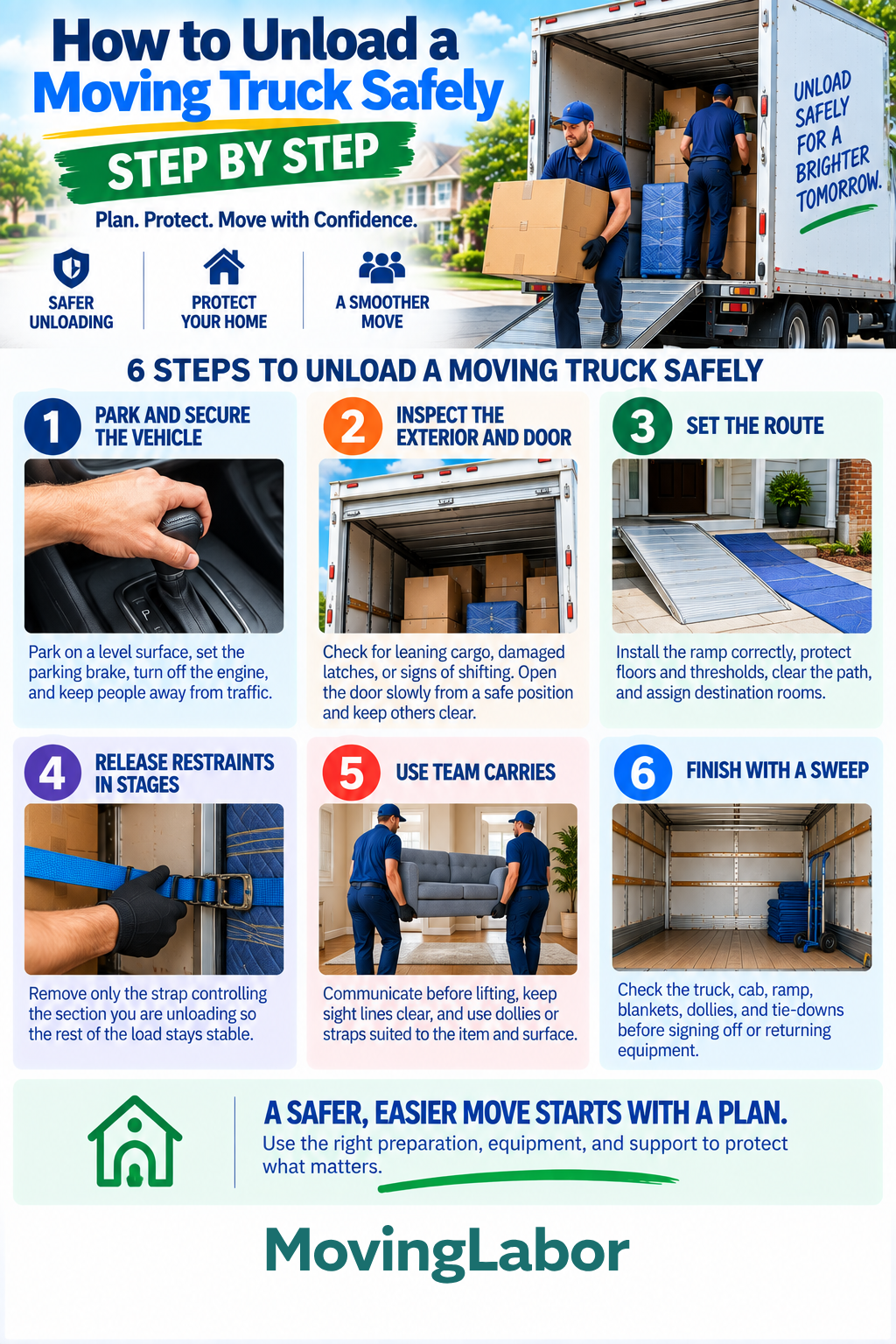
Safe unloading starts before the door opens: park on a level surface when possible, secure the truck, inspect the ramp and cargo door, open the door cautiously, stabilize anything that shifted, and move items through a protected, assigned route.
This guide connects four decisions in the Loading & Unloading plan: park and secure the vehicle, inspect the exterior and door, set the route, and release restraints in stages. Loading and unloading are safety-critical stages. The useful standard is not merely getting everything off the truck; it is controlling each item through the route, protecting people and surfaces, and keeping the remaining load stable throughout unloading.
Quick Answer
Start with the Park and secure the vehicle step, then complete Inspect the exterior and door, and verify Set the route before unloading begins.
Before the active move window, document what will happen for the Park and secure the vehicle, Inspect the exterior and door, and Set the route steps. If one assumption changes, review the remaining steps instead of forcing the original estimate or schedule.
Step-by-step plan
1. Park and secure the vehicle
Use a legal, level location when possible, shift the truck into Park, set the parking brake, turn off the engine, and follow the rental company's instructions.
Keep the unloading area clear of unnecessary vehicle and pedestrian traffic. Current U-Haul truck instructions specifically direct users to set the parking brake, place the transmission in Park, and turn off the engine when parked.
2. Inspect the exterior and door
Before opening the cargo area, look for damaged latches, unusual pressure against the door, or other signs that the load may have shifted.
Open the door cautiously from a safe position and keep other people clear. If belongings have shifted against the door or appear unstable, stop and determine how the section can be stabilized before continuing.
3. Set the route
Install the ramp according to the truck provider's instructions, protect floors and thresholds, clear doors and walkways, and assign destination rooms.
Check the ramp and cargo floor for water, oil, debris, or other conditions that could create a slipping hazard. U-Haul specifically instructs users to remove contamination from wet or oily cargo floors and ramps.
4. Release restraints in stages
Remove only the straps or restraints controlling the section you are ready to unload.
Keep deeper sections restrained whenever practical so removing one section does not destabilize the remaining load.
5. Use team carries and moving equipment
Communicate before lifting, keep sight lines clear, and use furniture dollies, appliance dollies, moving straps, or other appropriate equipment when needed.
Make sure the route remains clear as belongings enter the home. Do not allow boxes or furniture to accumulate at the cargo door, on the ramp, or at the bottom of the ramp.
6. Finish with a sweep
Check the cargo area, attic or over-cab storage area if equipped, cab, ramp, furniture pads, dollies, straps, and tie-downs before signing off or returning rental equipment.
Inspect the truck for belongings and equipment before closing and securing the cargo door.
Decision checkpoints
- Before booking — Inspect the exterior and door: Record who owns this step, its deadline, and the written or visible confirmation that it is complete.
- Before work begins — Release restraints in stages: Record who owns this step, its deadline, and the written or visible confirmation that it is complete.
- Before closing out the job — Finish with a sweep: Record who owns this step, its deadline, and the written or visible confirmation that it is complete.
Move-day checklist
- Review the Park and secure the vehicle decision
- Verify the Set the route details
- Complete the Use team carries and moving equipment step
- Cargo door and final load section checked
- Ramp and cargo floor inspected
- Ramp and pathway clear
- Furniture and floors protected
- Remaining load kept stable
- Truck and equipment checked before closeout
Common mistakes to avoid
- Standing directly in front of the cargo door when the load may have shifted. Revisit inspect the exterior and door and keep people clear until the condition of the load is understood.
- Removing all straps at once. Revisit release restraints in stages and keep sections secured until they are ready to be unloaded.
- Letting boxes accumulate in the doorway or at the bottom of the ramp. Revisit set the route and keep the unloading path clear throughout the move.
Where professional moving labor fits
For How to Unload a Moving Truck Safely, professional labor can provide the crew for planned unloading work. Share the inventory, difficult-item photos, access conditions, truck size, equipment type, and arrival window so the crew can evaluate the route and unloading requirements rather than relying on a generic room count.
Use Professional unloading help or the Truck and Container Calculator on MovingLabor.com to continue planning. For this guide, apply the result to the Park and secure the vehicle step and confirm the final scope, availability, minimums, and price in writing.