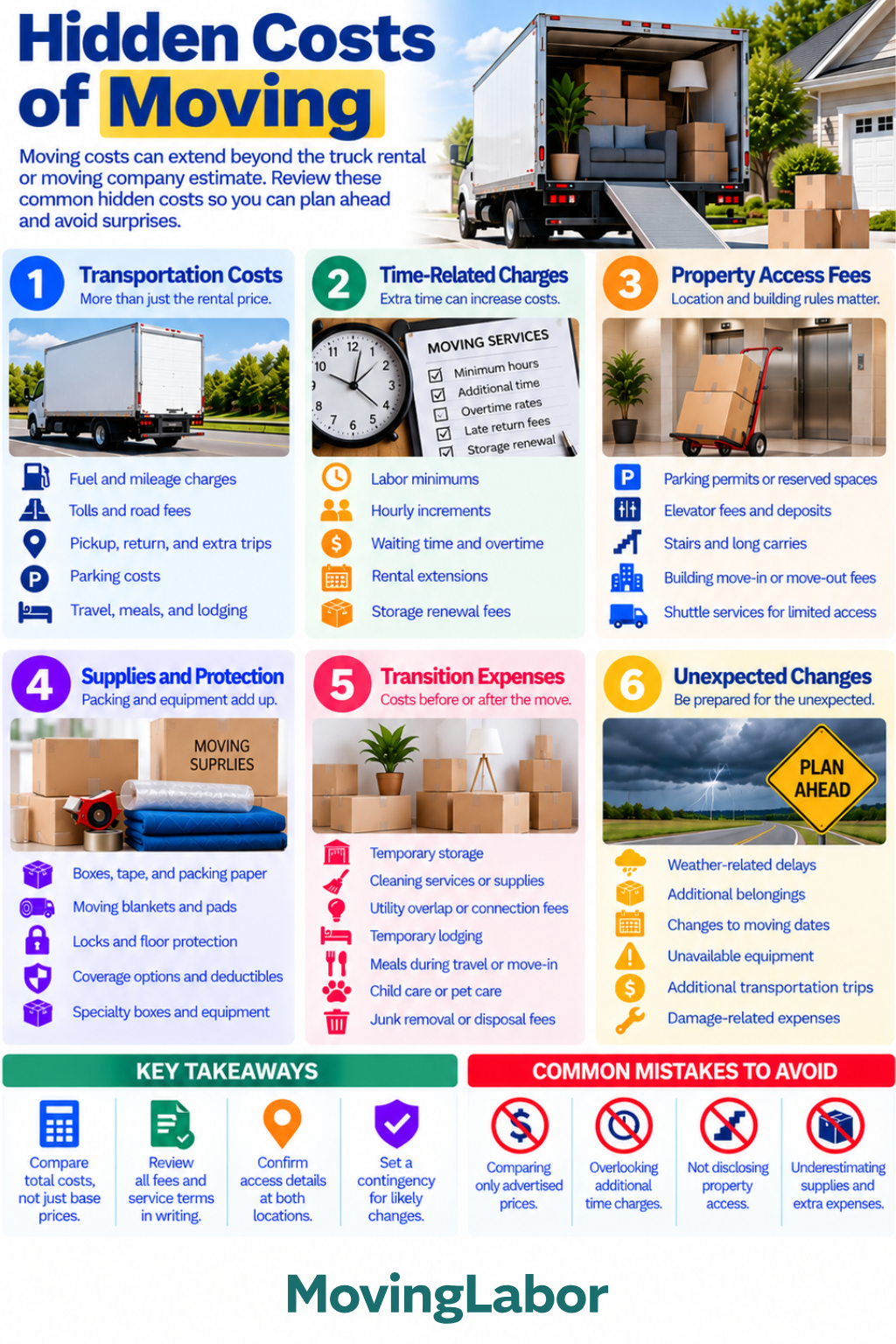
Moving expenses can extend well beyond the initial truck rental or moving company estimate. Fuel, extra labor, packing supplies, parking, storage, and unexpected delays can increase the final cost of a move.
Some expenses are disclosed in rental agreements or moving estimates but are easy to overlook. Others arise when plans change. Understanding these costs before booking helps you build a realistic moving budget and avoid surprises.
Quick Answer
The most commonly overlooked moving expenses fall into six categories:
- Transportation: Mileage, fuel, tolls, towing, and additional trips.
- Time-related charges: Extra labor hours, rental extensions, waiting time, and late returns.
- Property access: Parking permits, stairs, long carries, elevators, and building requirements.
- Supplies and protection: Boxes, packing materials, equipment, coverage options, and potential out-of-pocket damage costs.
- Transition expenses: Storage, cleaning, utility overlap, meals, lodging, and child or pet care.
- Unexpected changes: Delays, added belongings, rescheduling, or unavailable equipment.
The best way to avoid surprise moving expenses is to compare complete written estimates, review rental and service terms, and budget for realistic changes.
Keep refundable deposits separate from actual expenses, but account for them when planning how much money you need available.
Step-by-step plan
1. Review transportation costs
Transportation expenses often go beyond the advertised rental or delivery price.
Check for:
- Mileage charges or mileage limits
- Fuel and refueling requirements
- Tolls and applicable road charges
- Equipment pickup and return trips
- Towing equipment and related charges
- Additional driving or second trips
- Parking costs
- Travel meals and lodging, if needed
For rental trucks, confirm whether mileage is included or billed separately. Review the fuel return policy and any applicable refueling charges.
For moving containers, check whether delivery, pickup, transportation, and additional container movements are included in the quoted price.
Budgeting Tip: Compare the complete transportation cost rather than the advertised daily rental rate or base delivery charge.
2. Understand time-related charges
Moving services and rental equipment may have specific time limits, minimum charges, or billing rules.
Review:
- Minimum labor booking hours
- Hourly billing increments
- Additional labor hours
- Waiting-time charges
- Overtime or after-hours rates, if applicable
- Truck rental extensions
- Late equipment returns
- Container rental periods
- Storage renewal dates
- Rescheduling or cancellation fees
A delayed loading appointment or late truck return can increase costs even when the original move was carefully planned.
Budgeting Tip: Ask how additional time is charged and when a new rental or billing period begins.
3. Check property access and building requirements
The layout and rules of your current and destination properties can affect moving costs.
Potential expenses include:
- Parking permits or reserved loading spaces
- Building move-in or move-out fees
- Elevator reservations
- Refundable elevator or damage deposits
- Long carrying distances
- Stair-related charges
- Shuttle services when a large truck cannot access the property
- Restricted loading hours
- Difficult furniture placement
Not every moving company charges separately for these conditions. However, access requirements may affect the estimate, labor time, or equipment needed.
Contact property management when applicable and share relevant access details with your moving provider before booking.
Budgeting Tip: Confirm parking, elevator access, stairs, and carrying distances at both locations.
4. Account for supplies, equipment, and protection
Packing and protecting your belongings may require more materials than expected.
Include applicable costs for:
- Moving boxes and packing tape
- Bubble wrap or packing paper
- Specialty boxes
- Moving blankets and furniture pads
- Stretch wrap
- Dollies and hand trucks
- Moving straps
- Floor and doorway protection
- Storage locks
- Rental coverage or protection options
Also review the applicable terms for damage, loss, deductibles, exclusions, and liability.
For professional household-goods movers, valuation protection is not necessarily the same as an insurance policy. Available options and requirements depend on the type of move and applicable regulations.
Budgeting Tip: Check which supplies and equipment are included before purchasing or renting them separately.
5. Include move-in and transition expenses
Some moving expenses occur before or after transportation is complete.
Common examples include:
- Temporary storage
- Cleaning supplies or cleaning services
- Junk removal or disposal fees
- Utility connection or overlapping service charges
- Temporary lodging
- Meals during travel or move-in
- Child care or pet care
- Replacement household essentials
- Furniture assembly or setup assistance
These expenses can be easy to miss when a moving budget focuses only on transportation and loading.
Budgeting Tip: Plan for expenses at both properties, including the days immediately before and after moving.
6. Prepare for unexpected changes
Even a well-organized move can encounter changes that affect the final cost.
Examples include:
- Additional belongings
- Longer loading or unloading times
- Unexpected storage needs
- Equipment availability changes
- Weather-related delays
- Changes to moving dates
- Additional transportation trips
- Damage-related expenses
Build a contingency based on the risks most relevant to your move.
For example, a long-distance rental truck move may require more flexibility for fuel, lodging, and rental time, while an apartment move may require additional planning for parking and elevator access.
Budgeting Tip: Identify likely sources of extra expense rather than adding an arbitrary amount without considering your moving requirements.
Decision checkpoints
- Before requesting estimates: Prepare an inventory and identify transportation, packing, storage, and labor needs.
- Before booking: Review mileage limits, labor minimums, billing increments, cancellation terms, and potential additional charges.
- Before moving day: Confirm parking, permits, building access, equipment, and supplies.
- Before work begins: Verify the agreed services and communicate any inventory or access changes.
- Before returning equipment: Check fuel requirements, return deadlines, and equipment condition.
- After the move: Review final invoices, additional charges, and refundable deposits.
Hidden moving costs checklist
- Transportation and rental charges reviewed
- Mileage limits confirmed
- Fuel and tolls estimated
- Equipment pickup and return included
- Labor minimums and hourly rates reviewed
- Additional labor charges understood
- Rental extension and late-return policies checked
- Parking and permit requirements confirmed
- Stair and long-carry conditions disclosed
- Elevator and building fees reviewed
- Packing supplies estimated
- Moving equipment costs included
- Coverage and valuation terms reviewed
- Storage costs and renewal dates confirmed
- Cleaning and disposal expenses considered
- Travel meals and lodging included if needed
- Child care or pet care arranged if needed
- Refundable deposits tracked separately
- Contingency funds considered
- Final charges and refunds reconciled
Common mistakes to avoid
Comparing only advertised prices
A low truck rental rate or moving estimate may not include every expense. Compare total costs based on the same inventory, route, and services.
Overlooking additional time charges
Extra labor hours, waiting time, rental extensions, and late returns can increase the final bill. Review billing rules before booking.
Failing to disclose property access
Stairs, long carries, restricted parking, and elevator requirements can affect moving time and charges. Share accurate access details in advance.
Underestimating packing supplies
Boxes, tape, furniture protection, and specialty packing materials can add up. Estimate supplies based on your inventory.
Forgetting destination expenses
Cleaning, storage, utility overlap, and household setup costs may continue after the truck is unloaded.
Confusing refundable deposits with fees
A refundable deposit is not automatically a permanent moving expense. However, deposits can affect available cash, and deductions may apply under the agreement.
Where professional moving labor fits
Professional moving labor can help with loading, unloading, packing, and heavy furniture while you manage transportation.
When comparing moving labor providers, review the complete estimated cost rather than focusing only on the advertised hourly rate.
Ask about:
- Crew size and hourly rates
- Minimum booking hours
- Travel or service-area charges
- Additional labor time
- Equipment availability
- Stairs and long carries
- Rescheduling and cancellation policies
- Services included in the booking
For a hybrid move, combine the estimated moving labor cost with truck or container expenses, fuel, supplies, and other applicable charges.
Use Packing help or the DIY vs. Movers Calculator to continue planning. For this guide, apply the result to the Audit transportation step and confirm the final scope, availability, minimums, and price in writing.