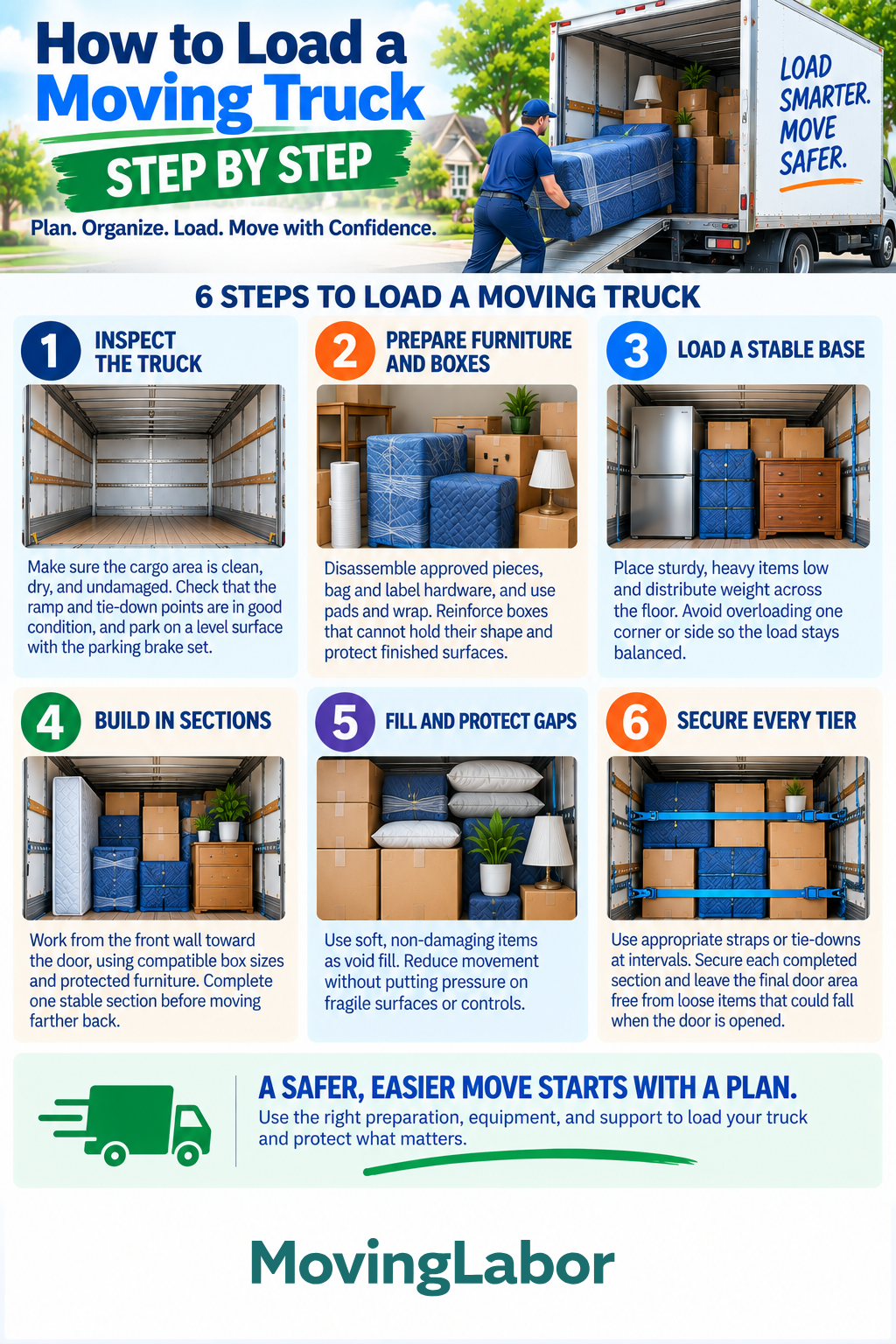
Load a moving truck by preparing the vehicle and pathway, protecting furniture, building balanced floor-to-ceiling sections from the front toward the door, filling gaps, and securing each section before starting the next.
This guide connects four decisions in the Loading & Unloading plan: inspect the truck, prepare furniture and boxes, load a stable base, and build in sections. Loading and unloading are safety-critical stages. The useful standard is not merely fitting everything inside; it is controlling each item through the route, distributing weight, protecting surfaces, and keeping the load stable during transit.
Quick Answer
Start with the Inspect the truck step, then complete Prepare furniture and boxes, and verify Load a stable base before the move becomes time-critical.
Before the active move window, document what will happen for the Inspect the truck, Prepare furniture and boxes, and Load a stable base steps. If one assumption changes, review the remaining steps instead of forcing the original estimate or schedule.
Step-by-step plan
1. Inspect the truck
Confirm the cargo area is clean, dry, and undamaged, and check that the ramp and usable tie-down points are in good condition.
Before loading, park the truck on a firm, level surface when possible, set the parking brake, and make sure the ramp is properly positioned and the pathway between the home and truck is clear.
2. Prepare furniture and boxes
Disassemble approved pieces, bag and label hardware, use furniture pads and wrap, and reinforce any box that cannot hold its shape.
Protect finished surfaces before moving furniture through doorways, hallways, stairs, or onto the truck.
3. Load a stable base
Place sturdy, heavy items low and distribute dense weight across the floor instead of creating one overloaded corner.
Avoid concentrating heavy belongings on one side or unnecessarily raising the load's center of gravity. A balanced base makes it easier to build stable sections as loading continues.
4. Build in sections
Work from the front wall toward the door, using compatible box sizes and protected furniture to create tight vertical tiers.
Complete one stable section before moving farther toward the rear of the truck. Keep heavier belongings lower in each section and use lighter items higher in the load.
5. Fill and protect gaps
Use soft, non-damaging items as void fill without placing pressure on fragile surfaces or controls.
The goal is to reduce movement without crushing boxes, furniture, electronics, or other belongings.
6. Secure every tier
Use appropriate straps or tie-downs at intervals rather than waiting until the entire truck is loaded.
Secure each completed section to appropriate anchor points, and check the load again as surrounding gaps are filled. Leave the final door area free from loose items that could fall when the truck door is opened.
Decision checkpoints
- Before booking — Prepare furniture and boxes: Record who owns this step, its deadline, and the written or visible confirmation that it is complete.
- Before work begins — Build in sections: Record who owns this step, its deadline, and the written or visible confirmation that it is complete.
- Before closing out the job — Secure every tier: Record who owns this step, its deadline, and the written or visible confirmation that it is complete.
Move-day checklist
- Review the Inspect the truck decision
- Verify the Load a stable base details
- Complete the Fill and protect gaps step
- Ramp and loading pathway checked
- Furniture and floors protected
- Heavy items kept low and distributed
- Each load section restrained
- Final door area checked
- Truck inspected before departure
Common mistakes to avoid
- Loading every heavy item on one side or at the rear. Revisit load a stable base and redistribute dense items before completing the load.
- Building an entire load before using the first strap. Revisit build in sections and secure completed sections as loading progresses.
- Using loose furniture as a wall without padding or restraint. Revisit secure every tier and make sure furniture is protected and restrained appropriately.
Where professional moving labor fits
For How to Load a Moving Truck Step by Step, professional labor can provide the crew for the planned loading or unloading work. Share the inventory, difficult-item photos, access conditions, truck size, equipment type, and deadline so the crew can evaluate the route and load rather than relying on a generic room count.
Use Professional loading help or the Truck and Container Calculator on MovingLabor.com to continue planning. For this guide, apply the result to the Inspect the truck step and confirm the final scope, availability, minimums, and price in writing.