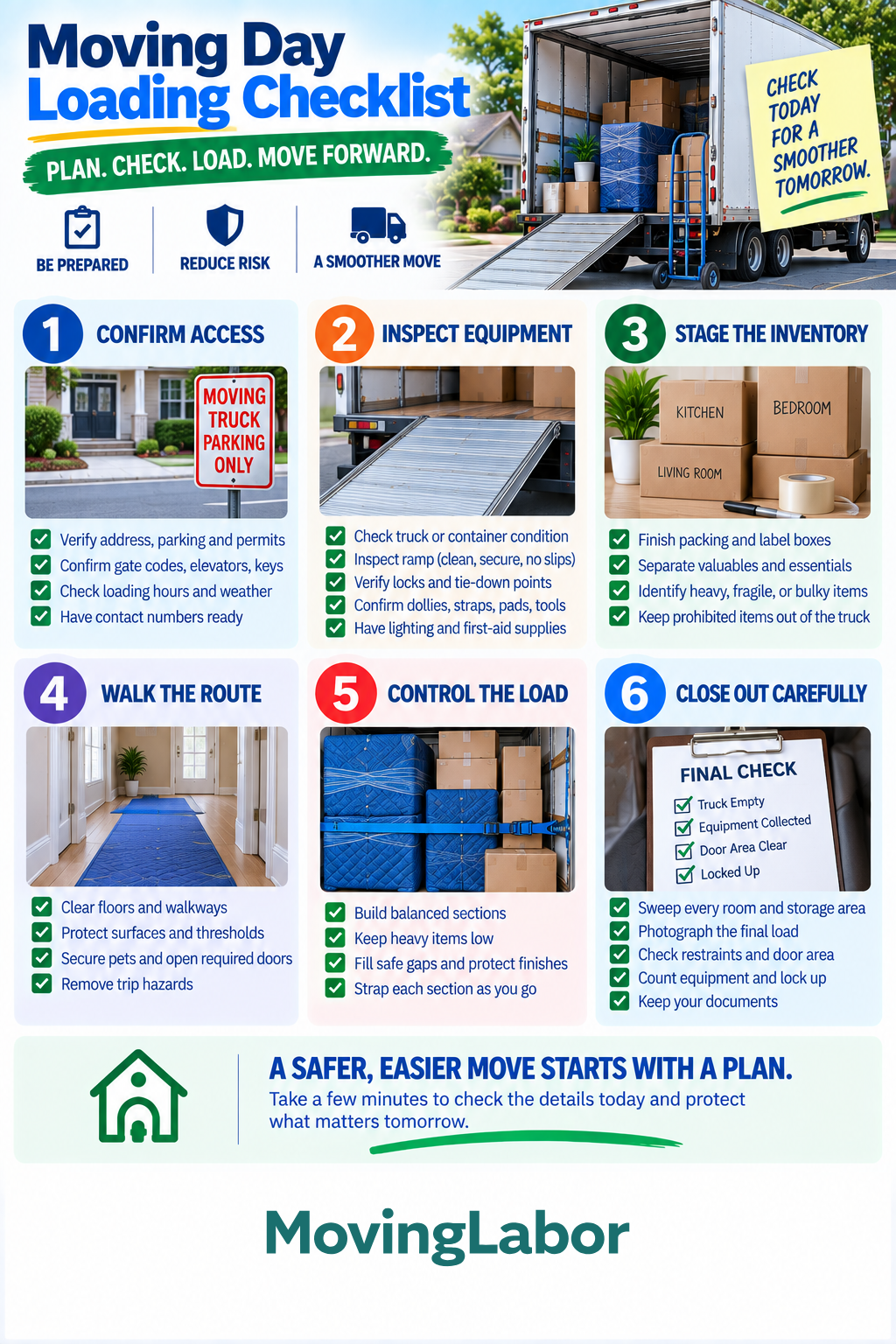
A loading checklist should confirm access, vehicle condition, packing readiness, protection materials, crew communication, load security, and a final property sweep. Complete the high-risk items before the clock and lifting begin.
This guide connects four decisions in the Loading & Unloading plan: confirm access, inspect equipment, stage the inventory, and walk the route. Loading and unloading are safety-critical stages. The useful standard is not merely fitting everything inside; it is controlling each item through the route, distributing weight, protecting surfaces, and keeping the load stable during transit.
Quick Answer
Start with the Confirm access step, then complete Inspect equipment, and verify Stage the inventory before the move becomes time-critical.
Before the active move window, document what will happen for the Confirm access, Inspect equipment, and Stage the inventory steps. If one assumption changes, review the remaining steps instead of forcing the original estimate or schedule.
Step-by-step plan
1. Confirm access
Verify addresses, parking, required permits, gate codes, elevators, keys, loading hours, weather, and contact numbers.
Make sure the truck, trailer, or container can be positioned where planned and that building or property access will be available when loading begins.
2. Inspect equipment
Check the truck or container, cargo area, ramp, locks, tie-down points, dollies, straps, furniture pads, tools, lighting, and first-aid supplies.
Make sure the ramp is properly positioned and free of water, oil, debris, or other conditions that could create a slipping hazard. Current U-Haul guidance similarly instructs users to inspect equipment and remove contamination from wet or oily cargo floors and ramps.
3. Stage the inventory
Finish packing, label boxes, separate valuables and prohibited items, and identify heavy, fragile, or difficult-to-move pieces.
Keep identification, keys, medications, critical documents, valuables, and immediate travel essentials separate so they are not accidentally loaded.
4. Walk the route
Clear floors and walkways, protect surfaces, secure pets, open required doors, and remove trip hazards.
Make sure the path from the home to the truck or container stays clear once loading begins.
5. Control the load
Build balanced sections, keep heavy items low, fill safe gaps, protect finishes, and secure completed sections with appropriate straps or tie-downs.
Do not wait until the entire truck is loaded to begin securing the load.
6. Close out carefully
Sweep every room, closet, cabinet, garage, attic, basement, and storage area that was part of the move. Photograph the final load, check restraints and the door area, count equipment, lock up, and retain relevant documents.
Before closing the cargo door, make sure loose belongings cannot fall against or interfere with the door.
Decision checkpoints
- Before booking — Inspect equipment: Record who owns this step, its deadline, and the written or visible confirmation that it is complete.
- Before work begins — Walk the route: Record who owns this step, its deadline, and the written or visible confirmation that it is complete.
- Before closing out the job — Close out carefully: Record who owns this step, its deadline, and the written or visible confirmation that it is complete.
Move-day checklist
- Review the Confirm access decision
- Verify the Stage the inventory details
- Complete the Control the load step
- Truck, trailer, or container inspected
- Ramp and pathway checked
- Furniture and floors protected
- Heavy and fragile items identified
- Valuables and essentials kept separate
- Completed load sections secured
- Final door area checked
- Property swept before departure
Common mistakes to avoid
- Starting before parking and building access are settled. Revisit confirm access and resolve parking, permits, elevators, gates, and other access requirements before loading begins.
- Packing last-minute loose items while the loading route is active. Revisit stage the inventory and finish packing before boxes and furniture begin moving through the route.
- Closing the truck without a final restraint and door-zone check. Revisit close out carefully and verify the load and door area before departure.
Where professional moving labor fits
For a Moving Day Loading Checklist, professional labor can provide the crew for planned loading work. Share the inventory, difficult-item photos, access conditions, equipment type, and deadline so the crew can evaluate the route and load rather than relying on a generic room count.
Use Professional loading help or the Move Inventory Builder on MovingLabor.com to continue planning. For this guide, apply the result to the Confirm access step and confirm the final scope, availability, minimums, and price in writing.