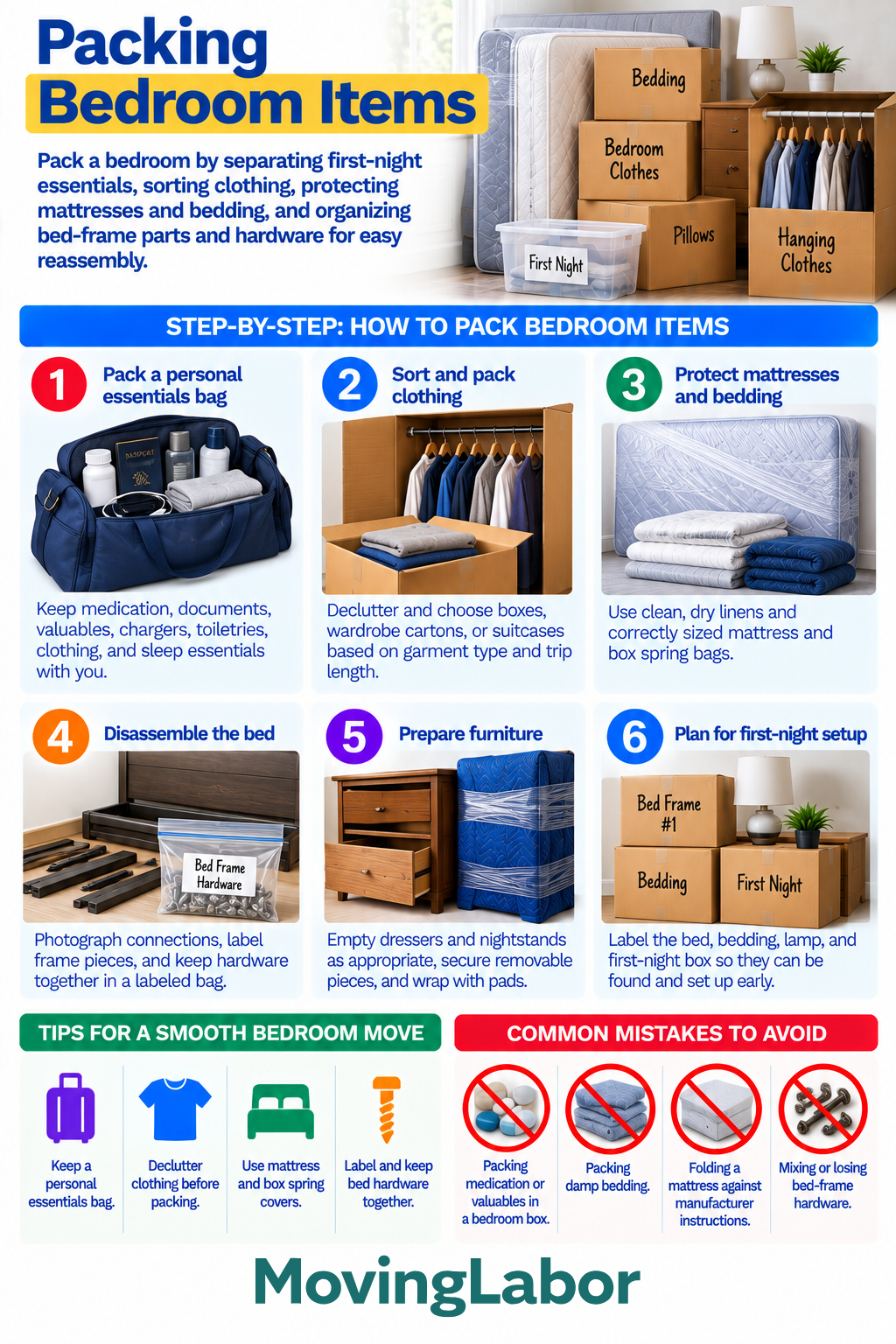
Pack a bedroom by separating the belongings you will need immediately, sorting clothing before boxing it, protecting mattresses and bedding, and organizing bed-frame parts and hardware for easy reassembly.
Prepare bedroom furniture before moving day and clearly identify the items needed to set up the room first at your new home.
Quick Answer
Start by packing a personal essentials bag that stays with you rather than going into the moving load. Include medications, important documents, valuables, chargers, toiletries, a change of clothes, and anything you will need for the first night.
Then pack the bedroom in this order:
- Declutter and pack clothing.
- Wash and completely dry bedding before packing it.
- Protect the mattress and box spring with appropriately sized covers.
- Disassemble the bed according to its instructions.
- Label and keep bed hardware with the corresponding frame.
- Prepare dressers, nightstands, mirrors, and other furniture.
- Clearly identify bedding and bedroom essentials for early setup.
Step-by-step plan
1. Pack a personal essentials bag
Before boxing the bedroom, separate belongings that should remain accessible throughout the move.
Consider keeping these with you:
- Medications
- Important documents
- Jewelry and valuables
- Phone and device chargers
- Toiletries
- Sleepwear
- A change of clothes
- Next-day clothing
- Other personal essentials
Do not accidentally load this bag into the moving truck with ordinary bedroom boxes.
2. Sort and pack clothing
Declutter clothing before packing so you are not moving items you no longer want.
Choose the packing method based on the type of clothing:
Folded clothing: Pack in clean moving boxes, suitcases, or other suitable containers.
Hanging clothing: Wardrobe boxes can keep garments on hangers and reduce folding.
Shoes: Pack clean, dry shoes separately from clothing when practical. Protect pairs and prevent heavier shoes from crushing lighter belongings.
Avoid making clothing boxes unnecessarily heavy.
3. Protect mattresses and bedding
Wash and completely dry sheets, blankets, comforters, and other washable bedding before packing when practical.
Use clean bags or boxes to keep bedding protected during handling.
Protect mattresses and box springs with correctly sized mattress covers or bags. Make sure the mattress is dry before covering it so existing moisture is not trapped inside.
Follow the mattress manufacturer's instructions for handling. Some mattresses should not be folded, bent sharply, or stored in certain positions.
4. Disassemble the bed
Before taking the bed apart, photograph connections or complicated hardware arrangements that may help during reassembly.
As you disassemble:
- Label major frame pieces when necessary.
- Keep matching components together.
- Place screws, bolts, washers, and other hardware in a labeled bag.
- Identify which bed the hardware belongs to.
- Protect finished or upholstered pieces before loading.
Follow manufacturer instructions for adjustable beds, storage beds, mechanical components, and other specialized frames.
Do not disassemble components that are not intended to be taken apart.
5. Prepare bedroom furniture
Empty and prepare dressers, nightstands, shelving, mirrors, headboards, and other bedroom furniture as appropriate.
Remove or secure detachable shelves and other loose components. Protect finished surfaces, corners, and vulnerable edges with suitable padding.
Whether dresser drawers can remain loaded depends on the furniture, drawer construction, contents, handling method, and moving provider's requirements. Removing contents generally makes the furniture lighter and eliminates loose items shifting inside.
Keep particularly heavy, fragile, liquid, or valuable belongings out of dresser drawers during the move.
6. Plan for first-night setup
Identify the bedroom belongings you want available soon after arrival.
These may include:
- Bed frame and hardware
- Mattress and foundation
- Sheets and pillows
- First-night box
- Toiletries
- Chargers
- Lamp or other basic lighting
- Next-day clothing
Label these belongings clearly and account for them when planning the loading order so they can be located without unnecessary searching.
Decision checkpoints
- Before packing clothing: Finish decluttering and separate what will be donated, discarded, or moved.
- Before packing the bedroom: Set aside medications, documents, valuables, and first-night essentials.
- Before covering the mattress: Make sure it is dry and check applicable manufacturer handling instructions.
- Before disassembling the bed: Photograph connections and prepare labeled bags for hardware.
- Before loading bedroom furniture: Make sure loose components are removed or secured and vulnerable surfaces are protected.
- Before the truck is fully loaded: Confirm that first-night bedroom items remain identifiable and appropriately positioned.
Bedroom packing checklist
- Personal essentials bag kept separate
- Medications and valuables kept accessible
- Clothing decluttered
- Hanging and folded clothing packed appropriately
- Bedding clean and completely dry
- Mattress and box spring protected
- Mattress handling instructions checked
- Bed-frame connections photographed when useful
- Hardware bagged and labeled
- Furniture parts clearly identified
- Dressers and nightstands prepared
- Finished surfaces protected
- Bedroom boxes clearly labeled
- First-night bedding easy to identify
- Bed setup items kept together
Common mistakes to avoid
Packing medications or valuables in ordinary bedroom boxes
Keep medications, important documents, jewelry, and other essential or valuable belongings with you rather than burying them in the moving load.
Packing damp bedding
Bedding should be completely dry before it is boxed or bagged. Avoid trapping existing moisture inside sealed packing materials.
Folding or bending a mattress without checking instructions
Mattress construction varies. Follow the manufacturer's handling guidance rather than assuming a mattress can be folded or sharply bent.
Losing bed-frame hardware
Loose screws and bolts are easy to misplace. Bag and label hardware immediately as the bed is disassembled and keep it associated with the correct frame.
Making clothing boxes too heavy
Clothing itself is often light, but shoes, books, accessories, and other bedroom belongings can quickly increase box weight. Keep cartons reasonably liftable.
Burying everything needed to rebuild the bed
A mattress is not particularly useful on arrival if the bed hardware or frame components cannot be found. Keep the complete setup identifiable throughout the move.
Where professional moving labor fits
Professional moving labor can help with bedroom furniture preparation, carrying, loading, and unloading. Some providers may also offer packing or furniture disassembly when those services are booked.
Before moving day, confirm whether bed disassembly and reassembly are included, which furniture the crew can handle, and who provides mattress bags, moving blankets, stretch wrap, and other protective materials.
If you are packing the bedroom yourself, complete ordinary packing and clearly label boxes before the crew arrives. Keep personal essentials, medications, important documents, and valuables separate from the moving load.
Use Professional packing help or the Packing Materials Calculator to continue planning. For this guide, apply the result to the Create a personal bag step and confirm the final scope, availability, minimums, and price in writing.