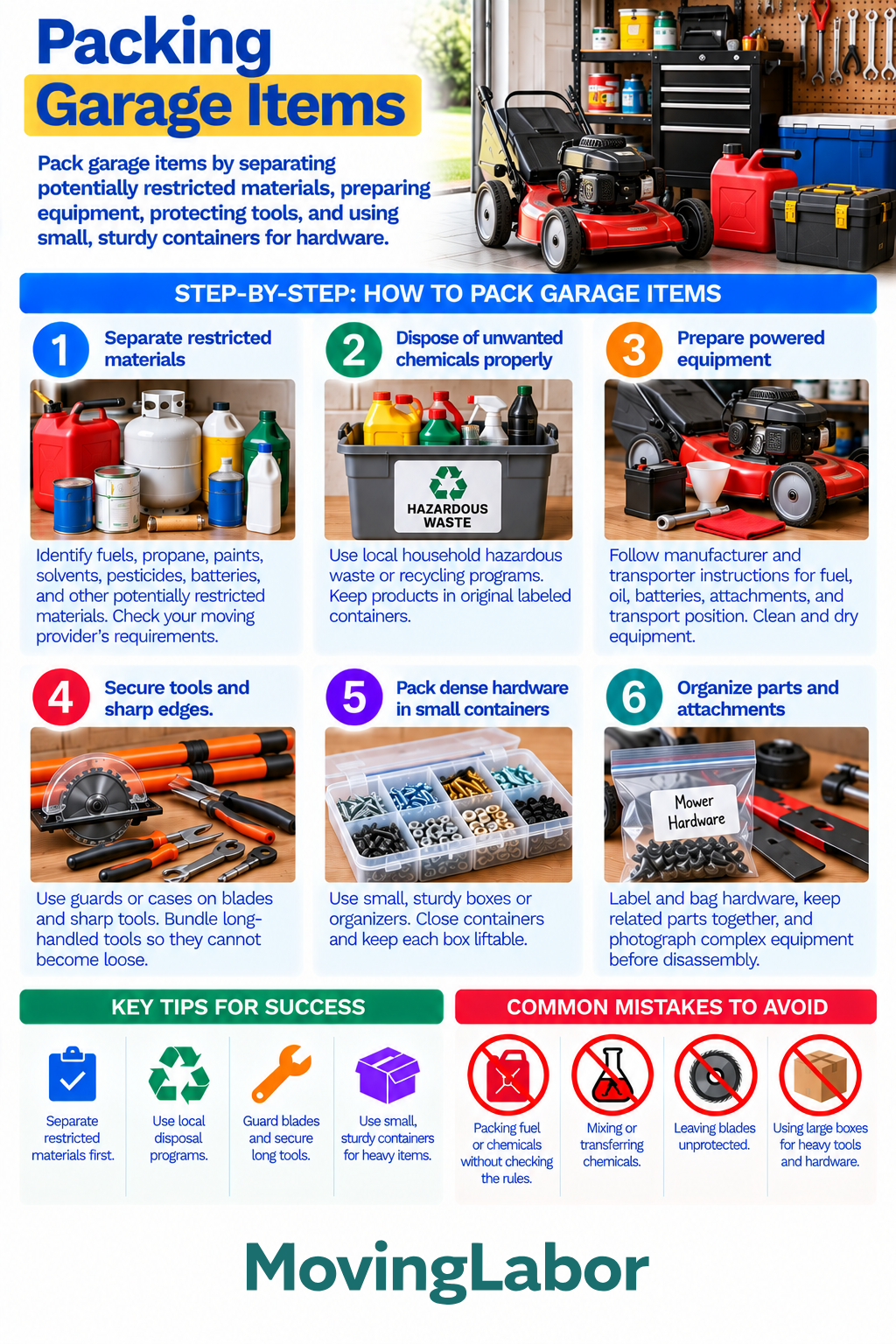
Garage packing should start by separating potentially restricted or hazardous materials from ordinary household goods. Review fuels, propane cylinders, paints, solvents, pesticides, pool chemicals, batteries, and other regulated materials before packing them for transportation.
Then prepare powered equipment according to manufacturer and transporter instructions, protect sharp tools, contain small hardware, and organize equipment parts so everything can be handled and loaded safely.
Quick Answer
Before packing the garage:
- Separate potentially restricted or hazardous materials.
- Check the requirements of your moving provider or rental truck company.
- Use local disposal programs for materials you cannot move or no longer want.
- Prepare fuel-powered equipment according to manufacturer and transporter instructions.
- Guard blades and sharp edges.
- Pack dense tools and hardware in small, sturdy containers.
- Secure long-handled tools and loose attachments.
- Label equipment parts and hardware before loading.
Do not assume that a material is allowed simply because it can be packed into a box.
Step-by-step plan
1. Separate potentially restricted materials
Before packing ordinary garage belongings, identify materials that may have transportation restrictions.
These can include:
- Gasoline and other fuels
- Propane cylinders
- Paints and solvents
- Pesticides
- Pool chemicals
- Automotive chemicals
- Certain batteries
- Compressed-gas cylinders
- Ammunition
- Other flammable, corrosive, or hazardous materials
Requirements vary by transportation method and provider. Check the applicable rules before deciding what can be included in the moving load.
Keep potentially hazardous materials separate from ordinary household goods while you determine how they should be handled.
2. Handle unwanted chemicals appropriately
Do not place unwanted garage chemicals into ordinary moving boxes or household trash without checking applicable local requirements.
Use appropriate local household hazardous waste, recycling, or disposal programs where required.
Keep products in their original labeled containers when practical until they can be handled appropriately. Do not combine chemicals or transfer them into unmarked containers simply to make them easier to move or dispose of.
3. Prepare powered equipment
Lawn mowers, trimmers, generators, pressure washers, and other powered equipment may require preparation before transportation.
Check the manufacturer's and transporter's instructions for:
- Fuel
- Oil
- Batteries
- Removable attachments
- Transport position
- Moving or locking components
Clean equipment before packing and allow it to dry.
Do not assume that draining fuel, removing a battery, or changing the equipment's orientation is appropriate for every machine. Follow the instructions for the specific equipment.
4. Secure tools and sharp edges
Clean and dry tools before packing them.
Use guards, cases, covers, or suitable protective materials on:
- Saw blades
- Drill bits
- Cutting tools
- Garden tools
- Other sharp or pointed equipment
Bundle or otherwise contain long-handled tools so individual pieces cannot become loose during handling or transportation.
Pack heavy tools separately from fragile household belongings.
5. Pack dense hardware in small containers
Nuts, bolts, screws, fasteners, hand tools, and other dense garage belongings can make large boxes excessively heavy.
Use small, sturdy cartons, tool cases, or divided organizers instead.
Close or secure organizers so small parts cannot spill during handling. Fill appropriate empty space in cartons and keep each container reasonably liftable.
Label boxes containing particularly heavy tools so their weight is not unexpected during handling.
6.Organize equipment parts and attachments
Before disassembling complicated equipment, photograph connections and attachment points when useful.
As components are removed:
- Label attachments
- Bag small hardware
- Identify which equipment the parts belong to
- Protect vulnerable components
- Keep related parts together
Avoid leaving loose hardware inside equipment or unmarked boxes.
Decision checkpoints
- Before packing the garage: Separate potentially restricted materials from ordinary belongings.
- Before disposing of anything: Check applicable local disposal or recycling requirements.
- Before preparing powered equipment: Review manufacturer and transportation instructions.
- Before boxing tools: Guard sharp edges and divide dense items into manageable containers.
- Before loading: Confirm restricted materials have been resolved and tools, equipment, attachments, and hardware are properly contained.
Garage packing checklist
- Potentially restricted materials identified
- Transportation requirements checked
- Unwanted chemicals handled appropriately
- Chemical containers kept labeled
- Powered equipment prepared as instructed
- Equipment clean and dry
- Blades and sharp edges guarded
- Long-handled tools contained
- Dense tools packed in small sturdy boxes
- Hardware organizers securely closed
- Equipment attachments labeled
- Small hardware bagged and identified
- Heavy cartons clearly labeled
- Restricted materials removed from the household-goods load when required
Common mistakes to avoid
Packing fuel, propane, or chemicals without checking the rules
Transportation requirements vary. Identify these materials before packing and check the rules for your specific moving method or provider.
Mixing or transferring chemicals
Do not combine leftover products or transfer them into unlabeled containers simply to make packing or disposal easier.
Leaving blades and sharp tools exposed
Use guards, cases, or appropriate protective materials so sharp edges cannot injure someone or damage other belongings.
Using large boxes for heavy tools
Tools and hardware become heavy quickly. Smaller sturdy containers are generally easier to control and less likely to become overloaded.
Leaving attachments and hardware loose
Label equipment parts as they are removed and keep small hardware in sealed, identified bags or organizers.
Where professional moving labor fits
Professional moving labor can help carry and load tools, tool chests, workbenches, lawn equipment, grills, and other garage belongings when those items are within the provider's service scope.
Before moving day, identify unusually heavy, oversized, or specialized equipment and confirm whether additional equipment or preparation is required.
Resolve questions about potentially restricted or hazardous materials before the crew arrives rather than expecting the moving crew to transport or dispose of them.
Use Professional packing help or the Packing Materials Calculator to continue planning. For this guide, apply the result to the Screen prohibited materials step and confirm the final scope, availability, minimums, and price in writing.