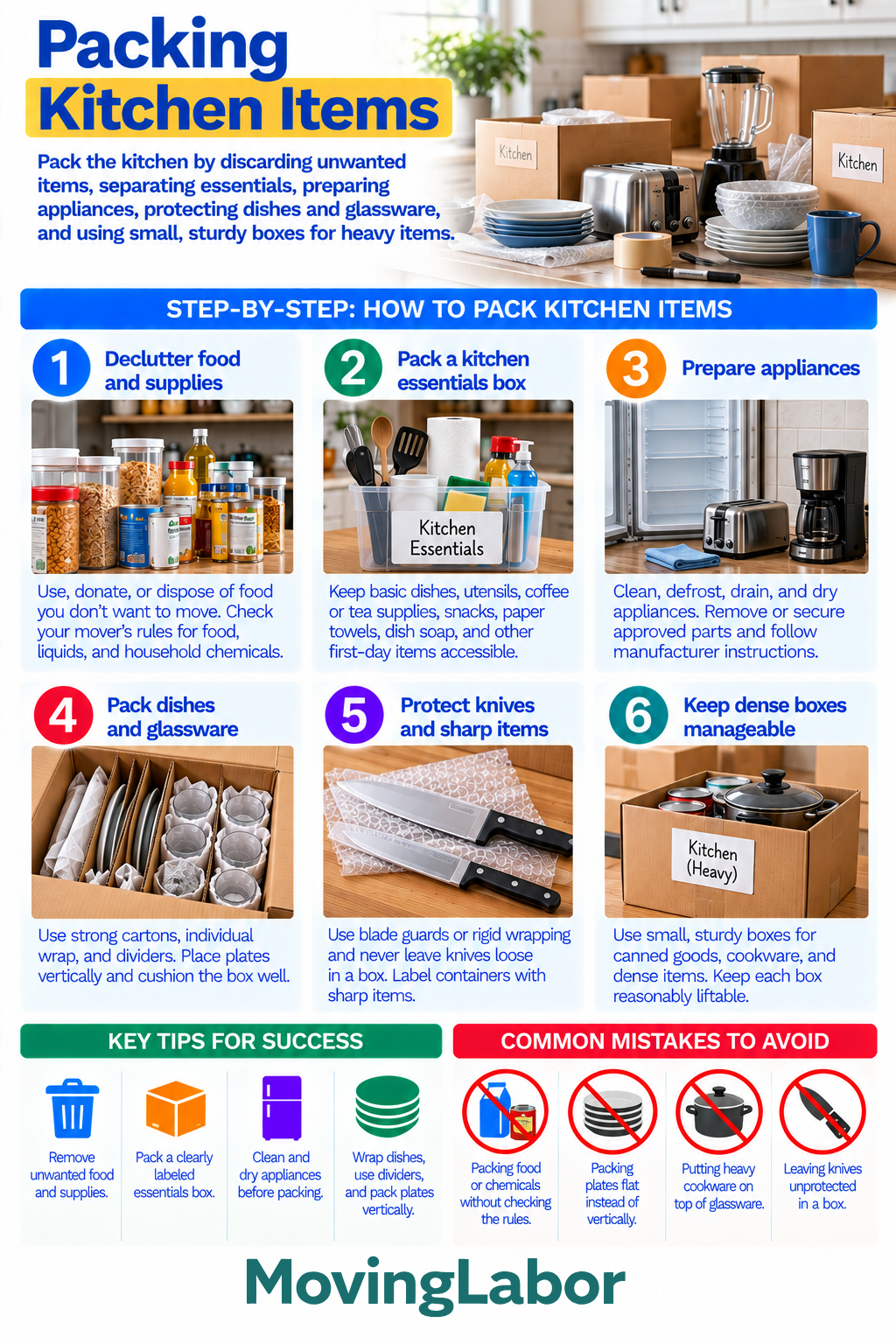
Pack the kitchen by decluttering food and supplies, separating first-day essentials, preparing appliances, protecting dishes and glassware, securing sharp items, and keeping dense kitchen boxes reasonably liftable.
Kitchen belongings vary widely in weight and fragility, so avoid packing cookware, glassware, pantry goods, and small appliances the same way.
Quick Answer
Pack the kitchen in stages, leaving everyday essentials until near the end.
Before moving day:
- Use, donate, or appropriately dispose of food you will not move.
- Separate potentially restricted liquids and household chemicals.
- Pack a kitchen essentials box.
- Clean and dry appliances before packing.
- Wrap dishes and glassware individually.
- Pack plates vertically with cushioning.
- Protect knife blades and other sharp edges.
- Use smaller boxes for cookware, canned goods, and other dense items.
Check your moving provider's requirements before packing food, liquids, or potentially restricted household products.
Step-by-step plan
1. Declutter food and kitchen supplies
Start with pantry goods, refrigerated food, cleaning products, and supplies you do not want to move.
Use, donate, or appropriately dispose of unwanted items before packing begins.
Check containers for leaks, damage, or expired contents. Keep potentially restricted household chemicals separate until you confirm whether they can be transported using your chosen moving method.
Avoid packing perishable food that cannot remain at an appropriate temperature during the move.
2. Pack a kitchen essentials box
Set aside the items you expect to need shortly before leaving and soon after arrival.
Depending on your household, this may include:
- Basic plates, cups, and utensils
- Coffee or tea supplies
- Snacks
- Paper towels
- Dish soap and a sponge
- Basic food-preparation items
- Trash bags
- Other first-day kitchen necessities
Keep medications with your personal essentials rather than burying them in a kitchen box.
Clearly label the kitchen essentials box so it can be located quickly.
3. Prepare appliances
Clean appliances and remove food, crumbs, grease, and moisture before moving them.
Follow manufacturer instructions when preparing refrigerators, freezers, dishwashers, ranges, microwaves, coffee makers, and other appliances.
Depending on the appliance, preparation may include:
- Defrosting
- Draining water
- Drying the interior
- Removing or securing shelves and trays
- Organizing cords and accessories
- Securing approved moving components
Allow appliances to dry thoroughly before closing or wrapping them.
4. Pack dishes and glassware
Use strong cartons with appropriate cushioning for breakable kitchen items.
Wrap dishes and glassware individually so hard surfaces do not strike one another.
For plates:
- Cushion the bottom of the box.
- Wrap plates individually.
- Place them vertically on edge.
- Use dividers or additional separation where helpful.
- Fill appropriate empty spaces.
- Add cushioning before closing the box.
Keep heavy cookware separate from delicate glassware rather than placing heavy items on top of breakables.
5. Protect knives and sharp items
Never place loose knives or other exposed blades into a general kitchen box.
Use appropriate blade guards, cases, or rigid protective wrapping to cover sharp edges.
Secure the protection so it cannot easily slide off during handling, and clearly identify containers holding sharp kitchen tools.
Keep sharp items organized rather than mixing them loosely with utensils.
6. Keep dense boxes manageable
Kitchen boxes can become heavy quickly.
Use smaller sturdy cartons for:
- Canned goods
- Cast-iron cookware
- Pots and pans
- Dense pantry goods
- Small appliances
- Other heavy kitchen items
Distribute heavy belongings among multiple boxes rather than filling one large carton.
Each box should close properly, maintain its shape, and remain reasonably liftable.
Decision checkpoints
- Before packing: Decide which food, liquids, and kitchen supplies will actually move.
- Before packing chemicals or questionable liquids: Check your moving provider's transportation requirements.
- Before packing appliances: Clean, drain, defrost, and dry them as applicable.
- Before sealing fragile boxes: Make sure dishes and glassware are individually protected and cannot shift excessively.
- Before staging boxes: Confirm sharp items are protected and dense cartons remain manageable.
- Before loading: Make sure the kitchen essentials box remains identifiable and accessible.
Kitchen packing checklist
- Unwanted food removed
- Perishable food plan completed
- Potentially restricted products separated
- Kitchen essentials kept accessible
- Appliances clean and dry
- Manufacturer instructions checked where applicable
- Appliance parts secured
- Dishes individually wrapped
- Plates packed vertically
- Glassware appropriately cushioned
- Heavy cookware separated from fragile items
- Knife blades protected
- Sharp-item boxes clearly identified
- Dense belongings packed in smaller cartons
- Boxes securely closed
- Boxes labeled by contents and destination
Common mistakes to avoid
Packing food or chemicals without checking restrictions
Some foods, liquids, cleaning products, and other household materials may be unsuitable or restricted for transportation. Check the requirements for your moving method before packing questionable items.
Packing plates flat
Plates are generally better protected when individually wrapped and packed vertically on edge with appropriate cushioning and separation.
Putting cookware on top of glassware
Heavy pots, pans, and appliances can place damaging pressure on fragile contents. Pack dense cookware separately.
Leaving knives loose
Loose blades can damage belongings and create a handling hazard. Cover sharp edges securely and keep knives organized.
Packing appliances while damp
Drain and dry applicable appliances before closing or wrapping them. Trapped moisture can create problems during transportation or storage.
Making kitchen boxes too heavy
Canned goods, cookware, and small appliances add weight quickly. Use smaller boxes and distribute dense belongings across multiple cartons.
Where professional moving labor fits
Professional packing help can be useful for kitchens because they often contain many fragile, dense, and irregularly shaped belongings.
Before booking, confirm whether the service includes packing dishes and glassware, preparing small appliances, and supplying boxes, dish packs, dividers, packing paper, or other materials.
If you are packing the kitchen yourself, finish ordinary packing before the loading crew arrives. Resolve potentially restricted items separately and clearly identify fragile, heavy, and first-needed boxes.
Use Professional packing help or the Packing Materials Calculator to continue planning. For this guide, apply the result to the Purge early step and confirm the final scope, availability, minimums, and price in writing.