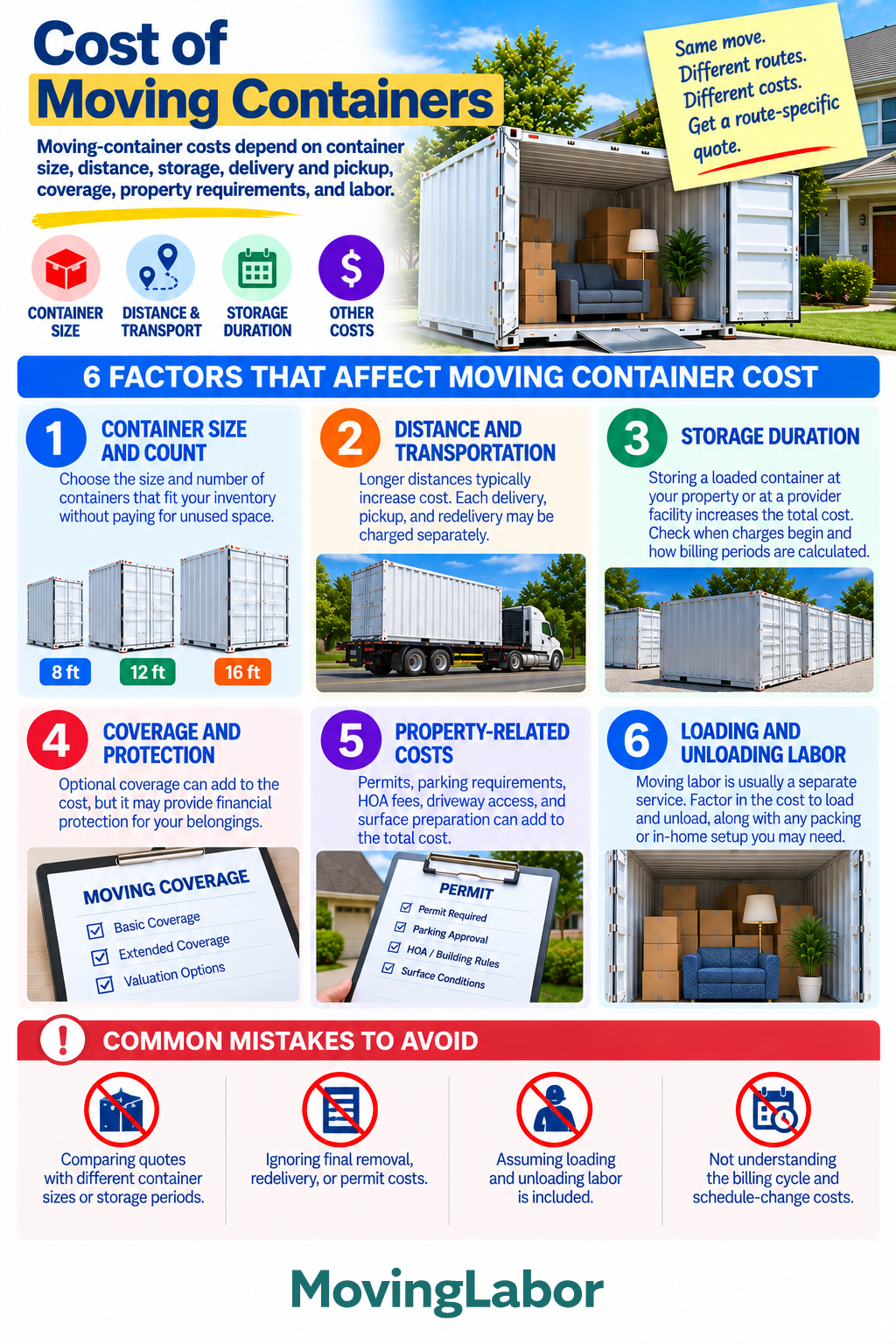
Moving-container costs depend on container size and quantity, move distance, delivery and pickup, transportation, storage duration, market availability, coverage, taxes or fees, property requirements, and loading or unloading labor. Compare quotes using the same addresses, dates, inventory, container needs, and storage period.
The initial advertised price may represent only part of the total cost. Before booking, identify each time the container will be delivered, picked up, transported, stored, redelivered, or removed and determine which charges apply.
Quick Answer
Start by estimating how much container space your belongings require. Then request quotes using the same origin, destination, dates, storage period, and container quantity.
Compare the all-in expected cost, including transportation, delivery and pickup events, storage, coverage, applicable property costs, locks, and loading or unloading labor. Also check what happens to the price if your schedule changes.
Step-by-step plan
1. Match size to inventory
Estimate the amount and type of belongings being moved before choosing a container.
Reserving more capacity than necessary can increase cost, while underestimating may require another container or a different transportation solution.
Consider both usable space and allowable weight, especially when moving dense belongings such as books, tools, boxed files, or gym equipment.
2. Map every container movement
Identify each stage of the reservation and determine whether it creates a separate charge.
Depending on the service, this may include:
- Initial container delivery
- Pickup after loading
- Transportation
- Transfer to storage
- Storage
- Destination redelivery
- Additional access or redelivery
- Final container removal
Do not assume that every movement is included in the initial quote.
3. Understand the billing cycle
Check how container rental and storage charges are calculated.
Ask when recurring charges begin, the length of each billing period, when the next charge occurs, and what happens if you keep the container longer than planned.
If your move-in date is uncertain, understand extension costs before booking.
4. Add property-related costs
Container placement can create expenses outside the provider's basic transportation quote.
Depending on the property and location, these may include permits, parking arrangements, HOA or building requirements, locks, or additional delivery or access charges.
Confirm placement requirements before reserving the container.
5. Price moving labor separately
Do not assume the container price includes people to load or unload your belongings.
If you need moving labor, calculate loading and unloading separately. Packing, furniture preparation, specialty-item handling, and in-home setup may also be separate services.
Coordinate labor with confirmed container availability so schedule changes do not create unnecessary labor costs.
6. Compare written totals
Compare quotes using the same assumptions.
Make sure each comparison uses the same:
- Origin and destination
- Move dates
- Container quantity and capacity
- Expected storage period
- Coverage assumptions
- Delivery and pickup requirements
- Loading and unloading labor
- Likely schedule changes
The lowest initial quote is not necessarily the lowest final cost.
Decision checkpoints
- Before requesting quotes: Estimate inventory, dense belongings, storage needs, and likely container quantity.
- Before booking: Identify every expected container movement and understand the billing cycle.
- Before delivery: Confirm placement requirements, applicable property costs, locks, and loading labor.
- Before accepting a quote: Compare written totals using the same assumptions and check the cost of likely schedule changes.
Move-day checklist
- Confirm the container size and quantity reserved
- Review the written pricing terms
- Confirm the storage billing period
- Confirm delivery and pickup arrangements
- Verify placement requirements
- Handle any applicable permits or parking requirements
- Confirm lock requirements
- Coordinate loading labor with container availability
- Review weight and prohibited-item rules
- Secure the completed load
- Keep reservation and billing information available
Common mistakes to avoid
Comparing quotes with different assumptions
A quote for one container and no storage is not directly comparable with a quote for two containers or several weeks of storage. Use the same move details when comparing providers.
Looking only at the initial container price
Delivery, transportation, storage, redelivery, final removal, and other applicable charges can affect the total. Review the complete written quote.
Ignoring schedule-change costs
Keeping a container longer than expected may trigger another rental or storage charge. Understand the billing cycle before assuming that a short delay will have little effect on cost.
Assuming moving labor is included
Container transportation and moving labor are separate services unless the quote specifically states otherwise. Budget for loading and unloading when needed.
Where professional moving labor fits
Professional moving labor can load or unload a customer-arranged portable moving container.
When estimating the complete cost of a container move, treat labor as its own budget item unless it is explicitly included in the reservation. Loading and unloading may involve separate crews, appointments, minimums, or rates.
Coordinate labor with confirmed container delivery and destination availability. When booking, provide the container size and quantity, inventory, heavy or difficult items, stairs, walking distance, and property-access conditions.
Use Storage moving or the Truck and Container Calculator to continue planning. For this guide, apply the result to the Match size to inventory step and confirm the final scope, availability, minimums, and price in writing.