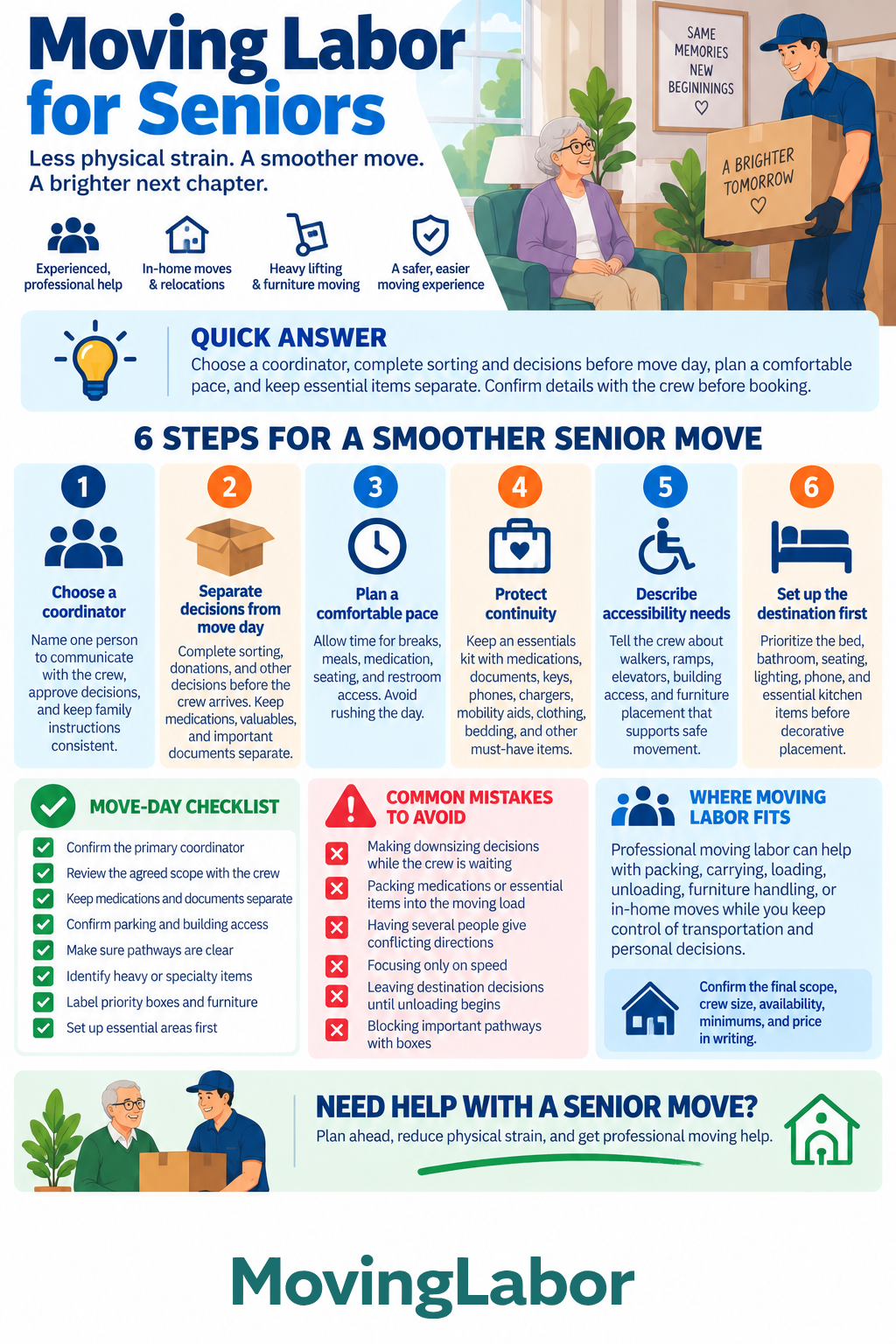
Moving labor can reduce the physical demands of a move for older adults while allowing the household or family to remain in control of packing decisions, transportation, and final placement. A calm schedule, clear decision-making, accessible pathways, and careful labeling can be just as important as the physical moving work.
This guide focuses on four important decisions: choose a coordinator, separate decisions from move day, plan a comfortable pace, and protect continuity. With labor-only moving, transportation and physical moving labor are typically arranged separately. A clear inventory, accurate access details, and written scope help the crew understand the job and plan the work.
Quick Answer
Before booking moving labor for a senior move, choose one person to coordinate instructions with the crew and family. Complete as much sorting, downsizing, and decision-making as possible before move day so paid moving time can focus on the physical work.
Plan the schedule around the older adult's comfort and routine, and keep medications, important documents, mobility aids, phones, chargers, and first-night essentials separate from the moving load. At the destination, prioritize essential furniture and frequently used areas before optional organization or decorative placement.
Step-by-Step Plan
1. Choose a Coordinator
Designate one person to communicate with the moving labor provider, approve changes, and keep instructions consistent. Make sure the crew knows who can answer questions about furniture placement, inventory, and priorities.
2. Separate Decisions From Move Day
Complete sorting, downsizing, donation decisions, and other disposition choices before the crew arrives whenever possible.
Set aside medications, important documents, valuables, keys, keepsakes, and other items that should remain with the older adult or family rather than entering the moving load.
3. Plan a Comfortable Pace
Avoid building the entire plan around the fastest possible schedule. Allow reasonable time for breaks, meals, restroom access, and other personal needs.
Keep seating and a quiet area available when practical so the older adult does not need to remain in the active moving path.
4. Protect Continuity
Prepare a clearly identified essentials bag or kit that stays with the older adult or family rather than being loaded with household belongings.
Include medications, important documents, keys, phones and chargers, necessary mobility aids, clothing, toiletries, bedding, and other items needed during the move and first night.
5. Describe Accessibility Needs
Tell the moving labor provider about accessibility conditions that affect the physical moving work or furniture placement. These may include ramps, elevators, walkers or other mobility equipment, narrow pathways, building access, and furniture that needs to be positioned to maintain clear routes.
At the destination, avoid placing boxes or furniture where they unnecessarily obstruct entrances, hallways, or frequently used pathways.
6. Set Up the Destination First
Prioritize the areas and belongings needed immediately. Depending on the household, this may include the bed, bathroom, seating, lighting, phone and chargers, mobility equipment, and basic kitchen items.
Complete essential setup before spending moving time on decorative placement or lower-priority organization.
Decision Checkpoints
- Before booking: Choose the primary coordinator and confirm who will communicate instructions and approve changes.
- Before move day: Complete sorting and downsizing decisions and separate belongings that should not enter the moving load.
- Before work begins: Confirm the moving priorities, accessibility considerations, transportation plan, and destination setup requirements with the crew.
- Before the crew leaves: Make sure essential furniture is positioned appropriately, important pathways are clear, and priority items are accessible.
Move-Day Checklist
- Confirm the primary coordinator
- Review the agreed scope with the crew
- Keep medications and important documents separate
- Keep keys, phones, chargers, and valuables accessible
- Keep necessary mobility aids available
- Confirm parking and building access
- Make sure pathways are clear
- Identify heavy or specialty items
- Label priority boxes and furniture
- Set up essential destination areas first
Common Mistakes to Avoid
- Making downsizing decisions while the crew is waiting. Complete sorting, donation, and disposition decisions before paid moving labor begins whenever possible.
- Packing medications or essential personal items into the moving load. Keep medications, important documents, keys, mobility aids, phones, chargers, and immediate necessities accessible throughout the move.
- Having several people give the crew different instructions. Designate one coordinator so placement and moving priorities remain consistent.
- Focusing only on speed. A rushed schedule can make an already demanding move more difficult. Build a realistic schedule around the household's needs and access conditions.
- Leaving destination decisions until unloading begins. Decide where essential furniture and priority belongings should go before the crew starts unloading.
- Blocking important pathways with boxes. Keep entrances, hallways, bathrooms, and other frequently used routes clear whenever possible.
Where Professional Moving Labor Fits
Professional moving labor can handle agreed physical work such as packing, carrying, loading, unloading, furniture handling, and in-home moving while the customer remains responsible for separately arranged transportation when booking labor-only service.
For senior moves, moving labor can be especially useful for physically demanding tasks while the older adult, family, or designated coordinator remains responsible for personal decisions, important belongings, and overall move planning.
Provide the moving labor provider with an accurate inventory, access details, heavy or specialty items, furniture placement priorities, and any relevant accessibility considerations that affect the work.
Use In-home moving help or the Move Inventory Builder to continue planning.
Confirm the final scope, crew size, availability, minimums, arrival window, and price in writing before the scheduled work.