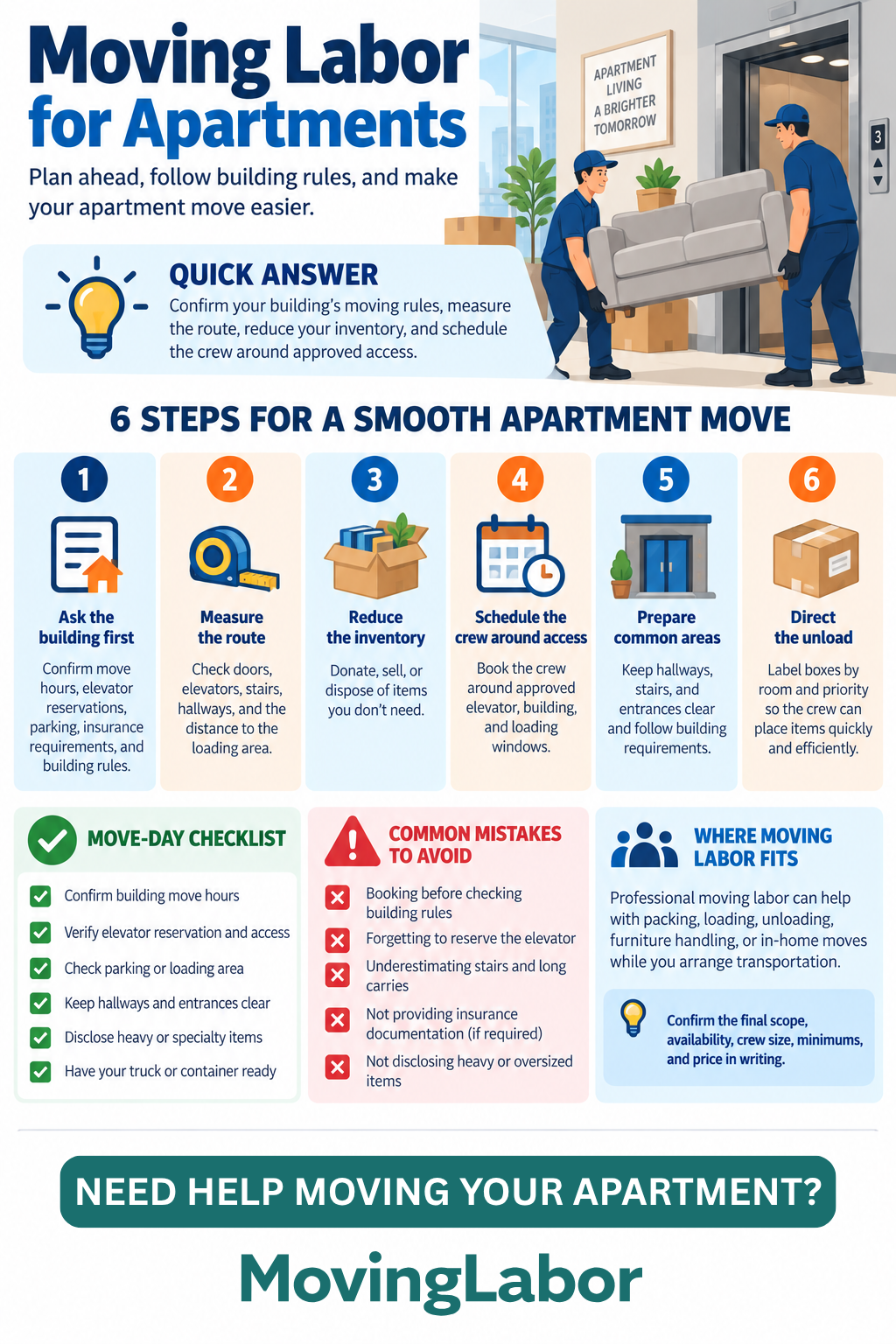
Apartment moving labor can help with packing, carrying, loading, unloading, furniture handling, and setup, but building rules and access conditions can affect the schedule. Elevator reservations, insurance requirements, loading areas, stairs, long hallways, and building move hours should be confirmed before booking.
This guide focuses on four important decisions in an apartment moving labor plan: ask the building first, measure the route, reduce the inventory, and schedule the crew around access. Labor-only moving works best when transportation and physical moving labor are treated as separate responsibilities. A clear inventory, accurate access details, and written scope help the crew understand the job and plan the work.
Quick Answer
Before booking apartment moving labor, contact your building management or landlord and confirm the rules for moving in or out. Ask about approved moving hours, elevator reservations, loading areas, parking, insurance documentation, deposits, and any requirements for protecting common areas.
Then inspect the entire route between the apartment and the truck or container. Tell the moving labor provider about stairs, elevators, long hallways, heavy items, parking distance, and other access conditions that could affect the work.
Step-by-step plan
1. Ask the building first
Confirm approved moving hours, elevator reservations, loading entrances, parking or loading procedures, deposits, insurance documentation requirements, and rules for protecting floors, walls, elevators, or other common areas.
2. Measure the route
Check doorways, elevator dimensions, stairways and landings, hallway length, building entrances, and the distance between the unit and the planned loading location. Measure large furniture when clearance could be tight.
3. Reduce the inventory
Apartment access can make unnecessary items more time-consuming to move. Donate, sell, recycle, or dispose of unwanted belongings before move day when practical.
4. Schedule the crew around access
Schedule moving labor around approved building, elevator, and loading windows. Allow enough time for building check-in, elevator access, parking, and any required protection setup.
5. Prepare common areas
Keep hallways, stairs, entrances, and other shared areas clear. Follow building requirements for doors, elevators, floor protection, and packing debris so the move does not create unnecessary hazards or interfere with other residents.
6. Direct the unload
Label boxes by room and identify priority items before unloading begins. Clear directions help reduce unnecessary trips and make it easier for the crew to place items where they belong.
Decision checkpoints
- Before booking: Confirm the building's moving rules, approved hours, elevator availability, insurance requirements, and loading procedures.
- Before confirming the crew: Provide accurate details about stairs, elevators, hallways, parking distance, heavy items, and other access conditions.
- Before work begins: Verify that the elevator, loading area, parking, and required building access are available for the scheduled move.
- Before unloading: Identify where furniture and boxes should go so the crew can work efficiently without unnecessary backtracking.
Move-day checklist
- Confirm approved building move hours
- Verify elevator reservation and access
- Confirm parking or loading area availability
- Keep hallways, stairs, and entrances clear
- Have required building documentation available
- Disclose heavy or specialty items to the crew
- Make sure the truck or container is ready
- Label boxes by room and priority
- Keep the written scope and payment terms available
- Confirm where large furniture should be placed
Common mistakes to avoid
- Booking moving labor before checking building rules. Restricted moving hours or elevator requirements can affect when the crew can work.
- Waiting to address insurance documentation. If the property requires documentation from a moving service provider, confirm the requirements early and determine whether the provider can meet them.
- Underestimating stairs and long carries. The distance between the apartment and the truck or container can affect the time and effort required.
- Forgetting to reserve the elevator. A crew may lose valuable time if an elevator is unavailable or shared with residents during the move.
- Not disclosing heavy or oversized items. Tell the provider about unusually heavy or bulky furniture and other specialty items before booking.
- Ignoring furniture clearance. Measure large furniture, doorways, elevators, and tight stair turns when there is a risk that an item may not fit.
Where professional moving labor fits
For moving labor for apartments, professional labor can handle agreed physical work such as packing, loading, unloading, furniture handling, or in-home moving while the customer remains responsible for separately arranged transportation when booking labor-only service.
Use the information gathered from the building and your access assessment to describe the job accurately. Confirm the final scope, crew availability, minimums, arrival window, and price in writing before the scheduled work.
Use Moving labor cost or the Move Difficulty Score Calculator to continue planning.